English
  Spanish
  French
  Russian
  Arabic
A radar speed display has a simple core function: it detects an approaching vehicle’s speed and shows that speed back to the driver. In practice, however, different roads have very different traffic characteristics, operating speeds, and safety risks, so there is no single configuration that is ideal for every application. The right radar speed display should be selected according to road speed, required viewing distance, type of driver feedback, radar detection conditions, power supply, and data requirements. A practical selection process therefore starts with three questions: what information does the driver need to see, how early should it be visible, and how strong should the feedback be?
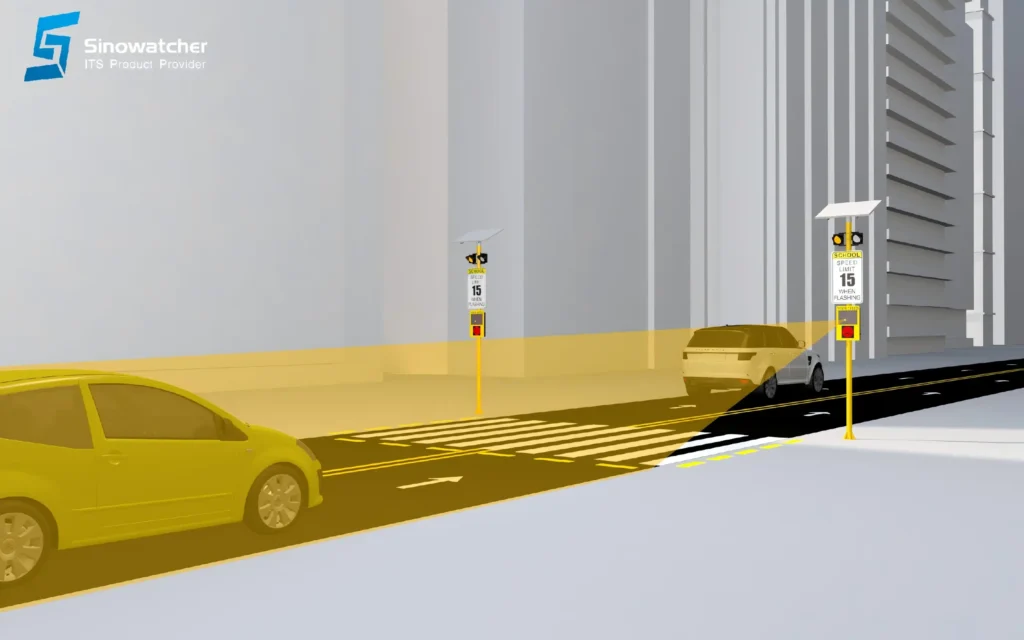
School Zones: Fast Recognition and Clear Speed Feedback
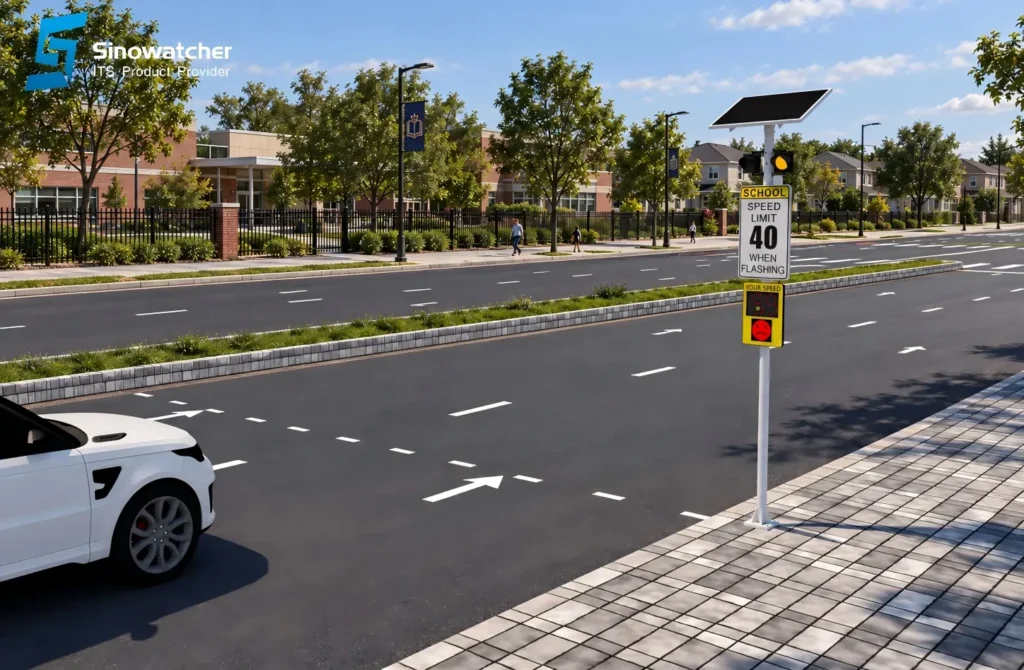
School zones usually already have a defined speed limit. The main challenge is not that drivers do not know the limit, but whether they immediately recognize their actual speed when approaching an area with concentrated pedestrian activity. An LED speed display sign should therefore make three pieces of information easy to understand at a glance: the posted limit, the vehicle’s current speed, and whether the vehicle is travelling too fast.
Compared with a screen that only shows a number, stronger visual feedback can make the message easier to process. Depending on the local traffic requirements and display configuration, a compliant or target speed can be shown with green digits or a positive symbol, while an excessive speed can trigger red digits or a warning symbol. Some dynamic speed display sign designs also use highly visible reflective borders or panels around the display, helping the device attract attention before a vehicle enters the most sensitive part of the school zone.
Time-based operation is also useful because school traffic is highly concentrated around arrival and dismissal periods. Depending on the project, the same unit may display live speed during school hours, switch to a different icon at other times, or continue detecting and recording speed without showing the speed on the screen. This flexibility allows a radar speed display to support the actual operating pattern of the road instead of using one fixed display mode all day.
Residential Areas: Simple Speed Awareness May Be Enough
Residential streets, gated communities, parking-area access roads, and other low-speed environments are different from school zones. Vehicle speeds are generally lower, and drivers have more time to read roadside information. In these applications, a radar speed display does not always need strong red/green judgment or expressive face icons.
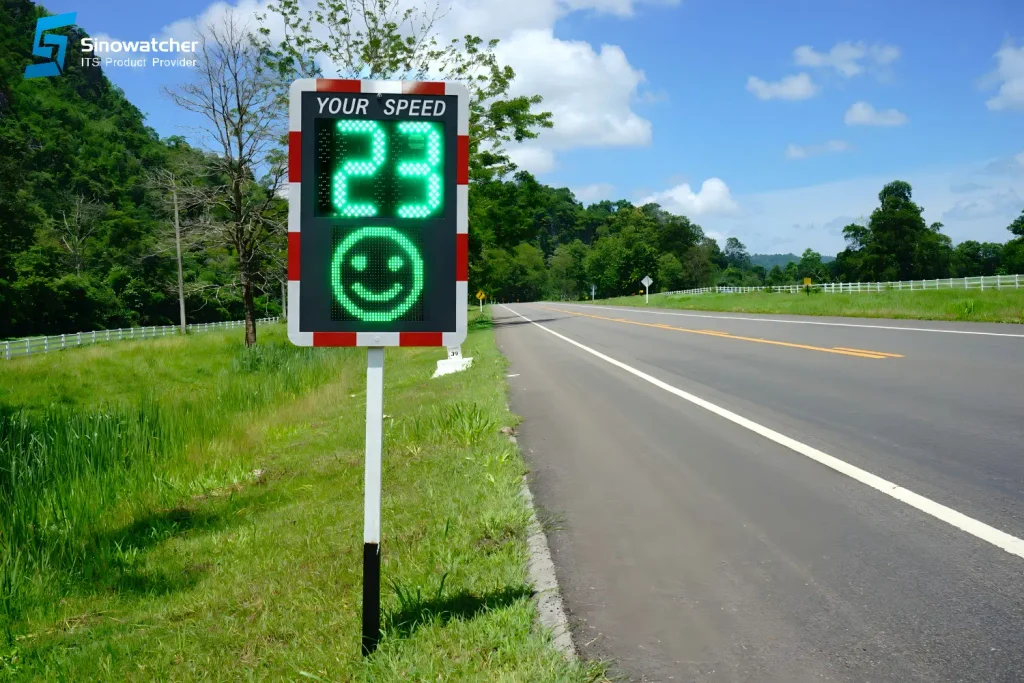
If the main purpose is simply to remind residents to watch their speed, a compact LED speed display sign showing “YOUR SPEED” and a clear real-time number may already be effective. The message is straightforward and does not add unnecessary visual complexity to a small road environment. This is particularly suitable where the speed limit is already obvious, and the project only needs to reinforce driver awareness.
Compact equipment can also be easier to install on existing poles or in locations with limited roadside space. If the road authority or property manager wants to understand when speeding is most common, a dynamic speed display sign with data logging can add value without changing the simple on-road message. The display remains easy for drivers to understand, while the recorded speed data can support later traffic-management decisions.
Urban Arterials and High-Speed Approaches: Longer Viewing Distance Matters
As operating speed increases, the time available for a driver to notice, read, understand, and react to a roadside display becomes much shorter. On urban arterials, high-speed approach roads, or sections where vehicles need to slow before a junction or pedestrian area, display size and viewing distance become more important than compact equipment dimensions.
For these applications, the digits on an LED speed display sign should be large enough to be read well before the vehicle reaches the device. If the number only becomes legible at close range, the driver may not have enough distance to reduce speed smoothly. The information hierarchy should also stay simple: posted limit, current speed, and an obvious indication of whether the driver needs to slow down.
Colour changes and simple graphics can further reduce interpretation time. For example, green can indicate that the measured speed is within the configured range, while red can indicate that speed reduction is needed. A dynamic speed display sign that supports configurable symbols can provide this quick visual judgement without adding long text that drivers would need extra time to read.
Installation conditions also matter on wider roads. Radar coverage should match the target traffic stream, especially where there are several lanes or the sign must be mounted at an angle. Selecting a radar speed display only by its maximum stated detection range is not enough; the radar field, mounting position, road direction, and intended driver viewing point all need to work together.
Village Entrances and Rural Roads: Encourage Deceleration Before the Low-Speed Area
Village entrances and rural transition roads often involve a sudden change in the driving environment. A vehicle may travel for a long distance on an open road and then quickly enter an area with homes, pedestrians, bicycles, or local access points. In this situation, the radar speed display should move the speed reminder upstream so the driver can begin slowing before reaching the lower-speed area.
Showing the posted limit and the measured vehicle speed together can be particularly useful because the driver can immediately compare “allowed speed” with “current speed.” On open rural approaches, an LED speed display sign also needs a viewing distance that matches the higher approach speed. If the unit is installed too close to the village or conflict point, accurate speed detection alone will not give the driver enough distance to react.
Rural projects also introduce practical installation issues. Mains power may not be easy to access, maintenance teams may need to travel farther, and equipment can be exposed to rain, dust, heat, and cold for long periods. For this reason, a dynamic speed display sign for rural use should be considered together with solar-power options, outdoor protection, installation structure, and maintenance access rather than being selected on display performance alone.
How to Select the Right Radar Speed Display
1. Display Size and Viewing Distance
Start with the distance from which a driver needs to read the message. A low-speed residential road may work well with a compact radar speed display, while an arterial road, village approach, or higher-speed section may require larger digits and a larger display area. Bigger is not automatically better; the important point is matching character size and visibility to the road’s actual operating speed.
2. Speed Display or Speed Evaluation
One of the most useful selection questions is whether the project only needs to show a speed or needs to judge that speed for the driver. A simple LED speed display sign can show the measured number clearly. In a higher-risk location such as a school zone, colour changes, smiling or warning faces, or other symbols can provide a much stronger indication of whether the current driving speed is appropriate.
3. Custom Icons and Display Modes
Where traffic-management needs change by time of day or operating condition, a dynamic speed display sign with configurable content provides more flexibility. Depending on the project, the unit can show live speed, switch to a predefined icon after a threshold is exceeded, use different modes at scheduled times, or continue radar detection and data recording while temporarily disabling the on-screen speed display.
4. Radar Detection and Installation Position
Longer radar range is not always the goal. The radar speed display needs to detect the target vehicle at a point that gives the driver enough time to recognize the message and decelerate. Road speed, lane arrangement, sign height, installation angle, and the direction of approaching traffic should therefore be evaluated together when deciding the installation position.
5. Brightness and Outdoor Visibility
A roadside display must remain readable in strong daylight, at night, and under changing weather conditions. The brightness performance of an LED speed display sign should support clear daytime visibility without becoming excessively bright after dark. Reflective outer markings can also improve the visibility of the unit itself, while suitable outdoor protection helps maintain reliable operation over time.
6. Power Supply and Data Functions
Urban fixed installations may have convenient access to mains power, while rural roads or locations where cabling is difficult may be better suited to solar power. If the project also needs long-term speed analysis, a dynamic speed display sign with data logging or communication functions can provide additional information on vehicle speeds and speeding patterns instead of serving only as an immediate roadside reminder.
Matching the Radar Speed Display to the Road Environment
Choosing a radar speed display is not about selecting the product with the largest screen or the longest feature list. School zones benefit from clear judgement and strong visual feedback; residential roads may only need a simple real-time speed reminder; urban arterials and high-speed approaches depend more on long-distance readability; and village entrances need to encourage drivers to reduce speed before they enter a lower-speed environment.
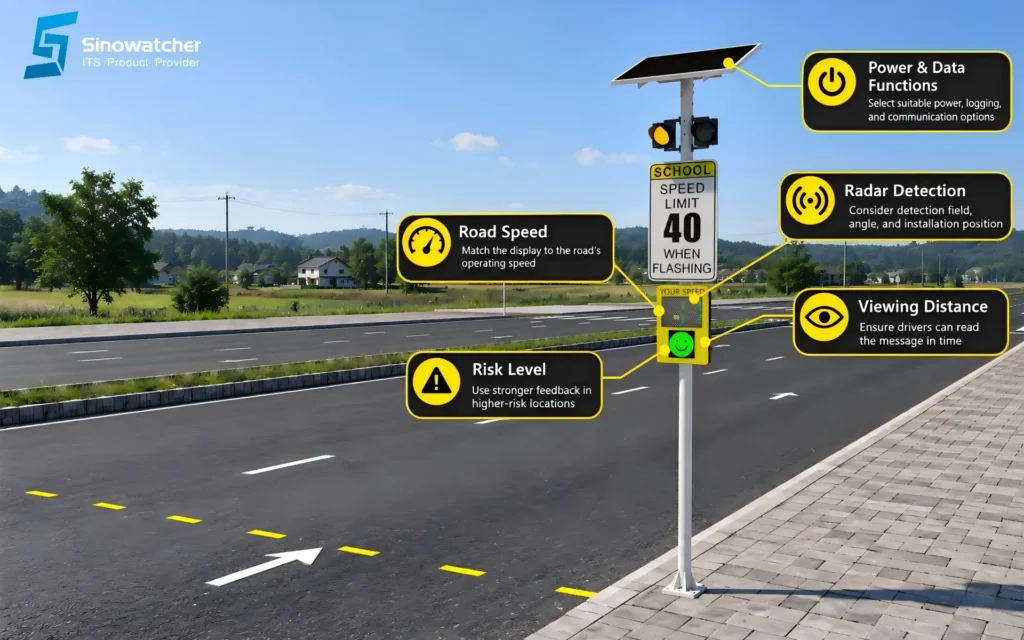
A practical selection principle is simple: road speed determines how far the message needs to be seen, risk level determines how strong the feedback should be, management requirements determine how intelligent the display needs to be, and site conditions determine how the unit should be powered and installed.
The real value of an LED speed display sign is not merely that it shows a number. A well-matched system delivers the right speed information, at the right location, in a form that drivers can understand quickly enough to adjust their behaviour before reaching the risk point.
FAQ
What size radar speed display should I choose?
The required size depends primarily on vehicle approach speed and viewing distance. Higher-speed roads generally require larger digits and longer readable distances, while compact displays may be sufficient for residential or low-speed environments.
Is a longer radar detection range always better?
No. The detection range should match the road geometry, installation position, approach speed, and intended driver reaction point. A longer stated range does not automatically result in better performance.
When should a radar speed display include data logging?
Data logging is useful when road authorities or project operators need to analyze speed distributions, identify recurring speeding periods, or evaluate road-safety measures over time.
Explore Radar Speed Displays
Sinowatcher provides radar speed displays with different display sizes, visual feedback modes, radar detection configurations, power options, and communication functions for different road applications. Explore the Veloris series or contact our team to discuss the requirements of your project. https://www.trafficsolution.cn/product-category/radar-speed-sign/