English
  Spanish
  French
  Russian
  Arabic
Video traffic detection uses cameras and AI analytics to turn intersection video into actionable traffic data, including vehicle counts, lane flow, turning movements, and queue estimates. Traffic agencies and system integrators use these insights to understand changing demand, support signal decisions, and evaluate intersection performance. The right solution depends on the detection goals, camera view, site conditions, and compatibility with existing controllers or management platforms.
Why Modern Intersections Need Visual Sensing
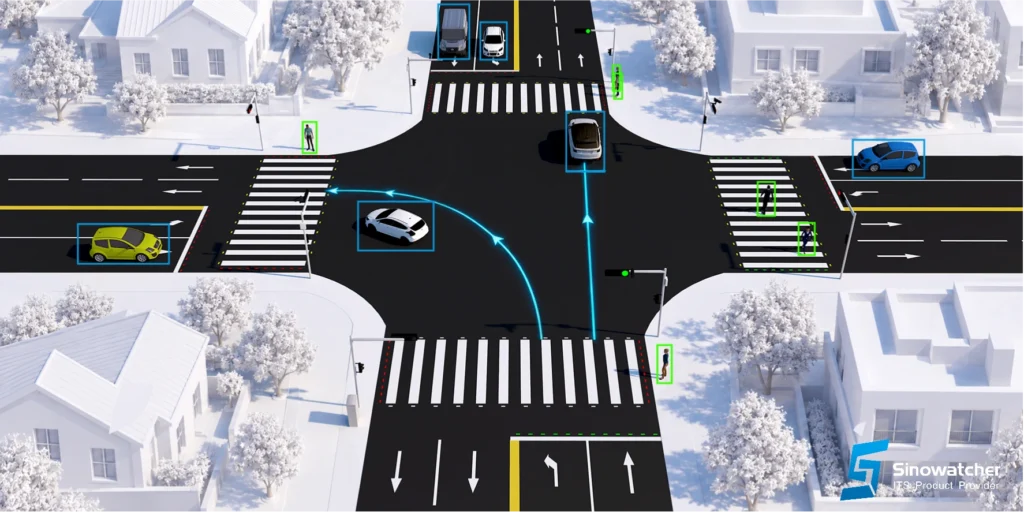
Traffic conditions can change quickly at an urban intersection. One approach may build a queue while another remains lightly used. Turning vehicles, pedestrians, and cyclists also affect how available green time should be shared. A fixed signal plan can provide a predictable operating schedule, but it may not reflect short-term changes in demand.
A camera-based system provides a broader view of the junction than a detector that observes only one point. With video traffic detection, operators can monitor defined lanes and areas, review traffic patterns, and collect information about different road users from a strategically selected camera view. The usable coverage depends on camera placement, image quality, and the system’s supported detection functions.
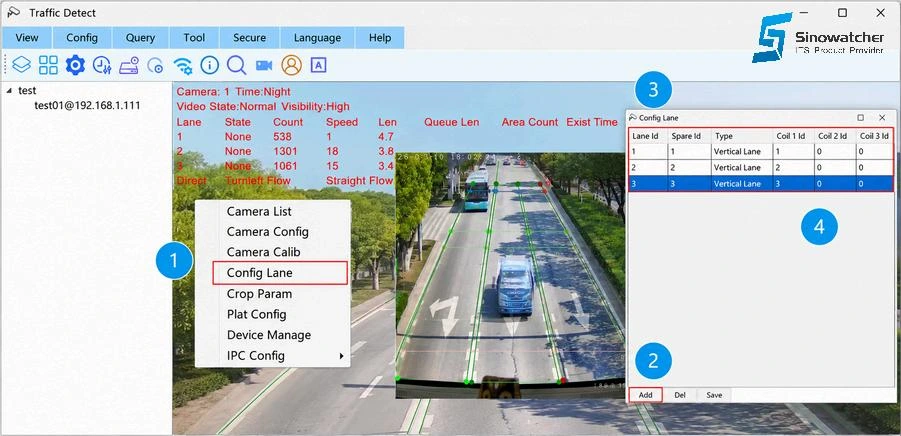
Video is only the input. AI analytics must process the images into structured data, and that data must be delivered in a format the signal controller or traffic management platform can use. This makes system integration and configuration part of the deployment plan, alongside the camera and detection device.
What Can AI Vehicle Detection Measure?
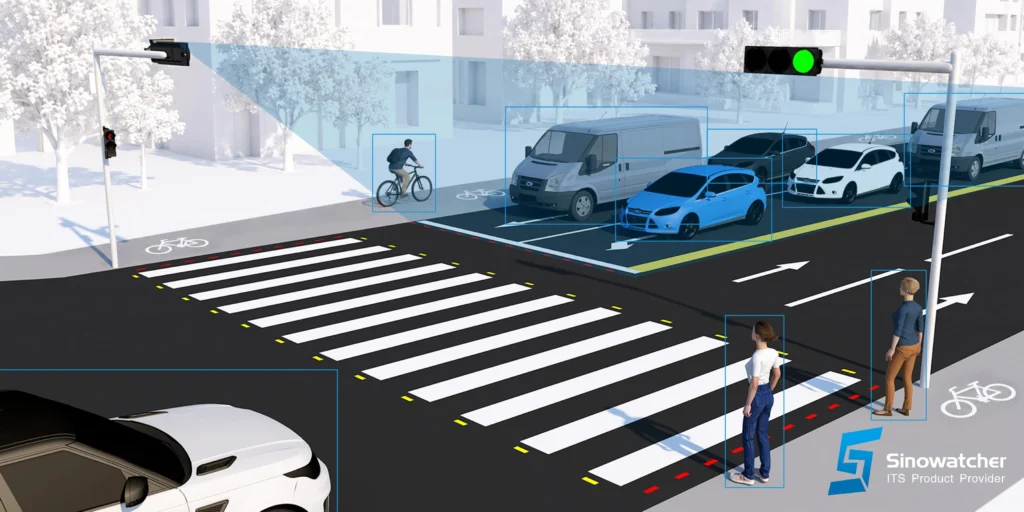
AI vehicle detection can identify vehicles in video and generate traffic measures based on the selected device and project configuration. Common outputs include:
- Vehicle counts and traffic volume: Count vehicles passing through a configured detection area over a selected time interval.
- Lane and approach flow: Compare traffic volume by lane or intersection approach to show where demand is concentrated.
- Turning movements: Identify straight-through, left-turn, or right-turn movements when camera views and system functions support the analysis.
- Vehicle classification: Group vehicles into supported classes, such as passenger cars, buses, or trucks, according to the system’s capabilities.
- Lane occupancy and queues: Estimate how much of a lane is occupied and track queue length or queue changes over time.
- Traffic conditions: Use flow, occupancy, and queue information to help identify changing traffic pressure or persistent congestion.
These outputs can support intersection monitoring, traffic studies, and signal control inputs. The exact data available depends on the product, camera position, detection-zone setup, and operating conditions. AI vehicle detection should therefore be selected against a defined use case rather than assumed to provide every measurement at every site.
How Detection Data Supports AI Traffic Management
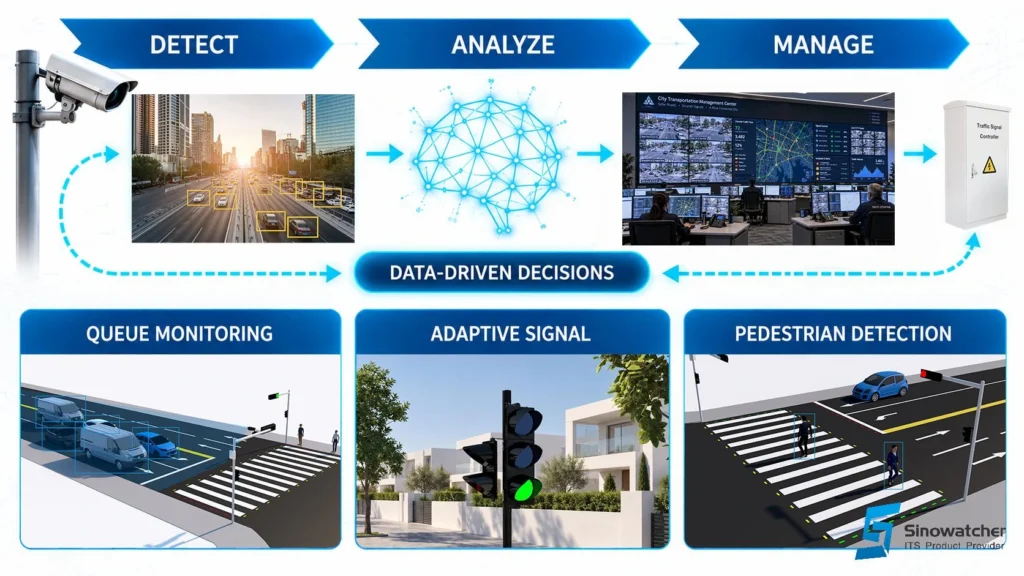
When detection outputs are shared with a signal controller or operations platform, they can inform AI traffic management decisions. For example, a system may use measured demand to support signal timing adjustments, compare queues across approaches, or provide operators with a clearer view of developing congestion. The response depends on local control logic, project requirements, and applicable traffic rules.
Adaptive signal control is one common application. If demand rises on a particular approach, the controller can use traffic data as an input when adjusting timing. The aim is to make signal operation better reflect observed conditions, while preserving required safety intervals and the approved control plan.
Detection data can also support queue and congestion monitoring. A growing queue may prompt an operator to review signal timing or other management measures. At intersections with significant pedestrian or bicycle activity, configured detection functions may provide additional information for operational analysis and safety management.
Over time, stored traffic data can support intersection performance reviews, transport planning, and maintenance. In this broader sense, AI traffic management includes both timely operational inputs and the longer-term use of data to understand how an intersection performs.
How to Choose a Video Traffic Detection System
A practical selection process starts with the operational question the project needs to answer. Use the following checklist to compare solutions:
- Define detection objectives: Specify whether the project needs vehicle counts, classification, turning movements, queue estimates, occupancy, pedestrian or cyclist detection, or data for signal control.
- Assess the intersection: Review lane layout, camera mounting options, field of view, occlusion, lighting across day and night, weather, and the areas that must be monitored.
- Confirm supported functions: Match each required output to the device’s documented capabilities and confirm the configuration needed to enable it.
- Check integration: Verify data interfaces, communication methods, and compatibility with the signal controller or traffic management platform.
- Plan operations and maintenance: Consider commissioning, parameter configuration, remote support, diagnostics, and ongoing maintenance requirements.
For real-time control projects, confirm that detection data can be transmitted with the required timeliness and stability. A site assessment or pilot can help validate camera coverage and system behavior under representative conditions before wider deployment.
FAQ
1. Does video traffic detection work at night or in bad weather?
Performance depends on image quality, camera specifications, installation, lighting, weather, and the detection system. Confirm the expected operating conditions and supported features with the supplier, and assess the camera view at the project site.
2. Can AI vehicle detection directly control traffic signals?
Detection equipment typically provides traffic data to a signal controller or management platform. Whether and how that data affects signal operation depends on system integration, controller logic, project configuration, and local rules.
3. Does one camera cover an entire intersection?
Coverage depends on intersection size, camera position, field of view, occlusion, and the required detection zones. A site assessment should confirm that all target lanes and road users are visible at sufficient image quality.
Connect Detection Capabilities to Real Intersection Needs
A suitable video traffic detection solution begins with a clear understanding of the intersection: which approaches and road users need to be observed, what information the project requires, and how that information will be used. Product capabilities, site conditions, interfaces, and operational goals should be evaluated together.
The most useful solution is one that reliably captures the target area and provides supported, interpretable data to the relevant controller or platform. By matching detection functions to real project requirements, agencies and system integrators can use visual sensing as a practical input for better-informed intersection management.