English
  Spanish
  French
  Russian
  Arabic
Drivers need to pay attention to their speed on the road; however, they may not always realize immediately when they are driving above the speed limit. This can happen when moving from a high-speed road into a lower-speed area or when traffic conditions change suddenly.
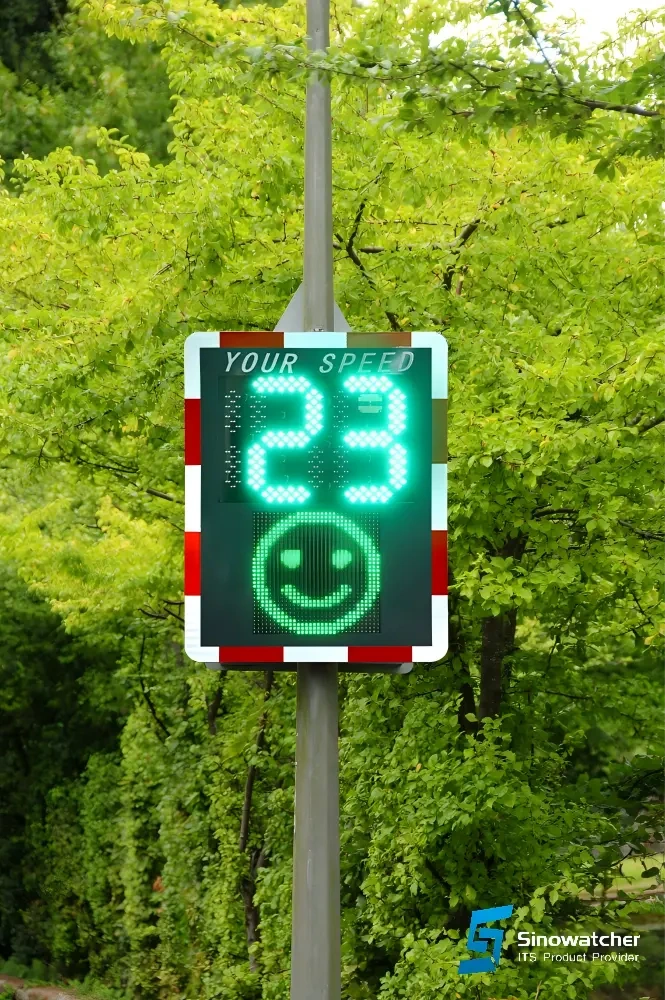
A conventional speed limit sign informs drivers of the permitted speed. However, a radar speed sign with driver feedback provides additional information by displaying the vehicle’s current speed in real time (Sinowatcher, 2026b).
This information allows drivers to compare their current speed with the posted speed limit and, if necessary, adjust it before entering areas that require greater attention, such as school zones, urban roads, or road construction areas. In this way, a vehicle speed sign provides immediate and relevant information to approaching drivers.
Why Is It Important to Display Speed in Real Time?
Traditional traffic signs display the same information to every driver.
For example:
Speed limit: 30 km/h
A vehicle speed sign can provide information directly related to the approaching vehicle:
Your speed: 42 km/h
The difference is simple.
A speed limit sign tells drivers the rule.
A radar speed sign with driver feedback shows drivers information about their current driving speed.
This information is more direct because it allows drivers to immediately see how fast they are traveling.
The purpose of this system is not only to detect vehicle speed. More importantly, it turns that measurement into visible and easy-to-understand information so that drivers have an opportunity to respond in time (Sinowatcher, 2026b).
How Does a Radar Speed Sign with Driver Feedback Work?
The process occurs automatically when a vehicle approaches the detection area.
1. The Radar Detects the Vehicle
The system uses radar to detect approaching vehicles and measure their speed.
The Radar Speed Sign with Driver Feedback uses a 24.125 GHz Doppler radar. Its standard detection distance is approximately 100 meters, with optional detection distances of 150 and 200 meters, depending on project requirements. This early detection allows the system to measure the vehicle’s speed before it reaches the sign.
The Doppler principle allows radar-based speed signs to determine vehicle speed by analyzing changes in the reflected radar signal from a moving vehicle (Sinowatcher, 2026b).
2. The Sign Displays the Current Speed
After detecting the vehicle, the system displays its speed on an LED display.
This allows drivers to see the information directly in front of them without relying only on the vehicle’s speedometer.
The vehicle speed sign turns the detected speed into a simple visual message: “This is your current speed.”
The Sinowatcher Radar Speed Sign with Driver Feedback can detect speeds ranging from 10 to 250 km/h, depending on the system configuration.
3. Visual Feedback Helps Drivers Interpret Their Speed
Displaying the vehicle’s speed is useful, but the sign can also use visual elements to make the information easier to understand.
Depending on the project configuration and local traffic regulations, the system can use different colors, display modes, or symbols. The Sinowatcher Radar Speed Sign with Driver Feedback supports configurable speed thresholds and uses a red and green LED display.
4. The Driver Has an Opportunity to Respond
This is the most important part of the system. When drivers see their speed displayed on the sign, they may realize that they are traveling faster than expected. This gives them an opportunity to reduce their speed before reaching an area that requires greater caution.
The main purpose of a vehicle speed sign is not only to monitor or record speed but also to improve driver speed awareness by providing immediate visual feedback (Sinowatcher, 2026b).
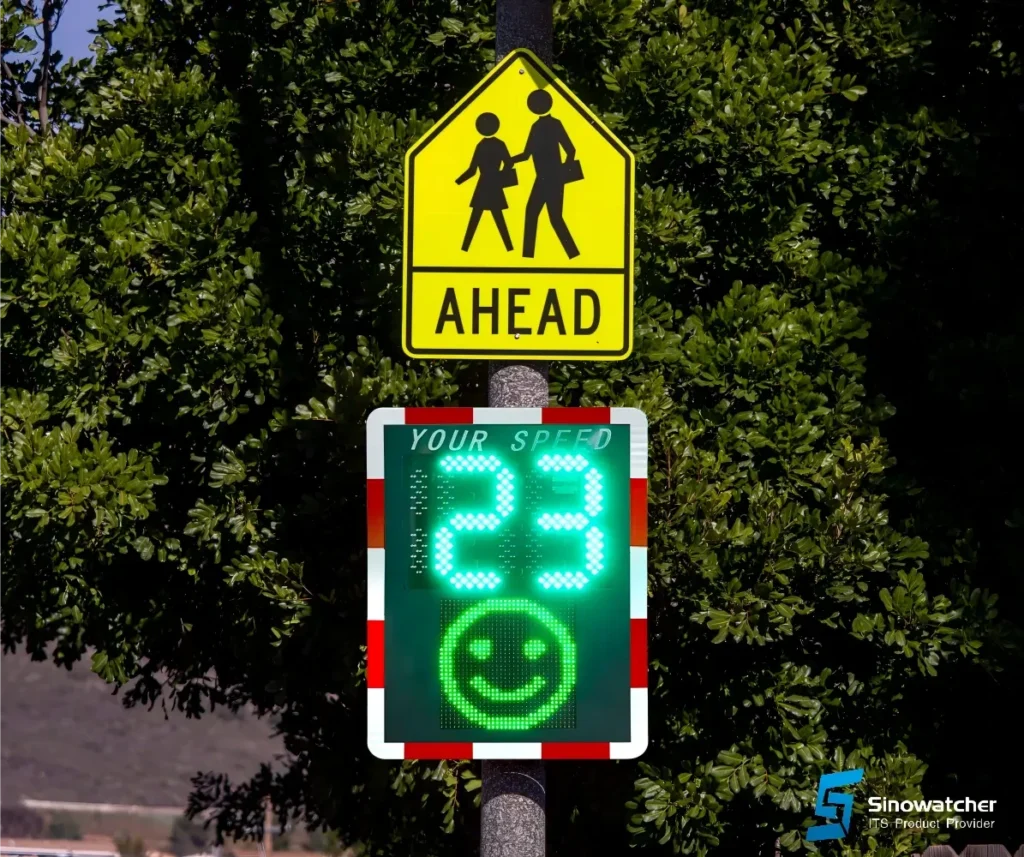
Where Can Radar Speed Signs Be Used?
A radar speed sign with driver feedback can be used in different environments where greater driver attention is needed, including school zones, urban roads, residential areas, and road construction zones (Sinowatcher, 2026b).
School Zones
School zones have specific traffic conditions because drivers may encounter children, parents, pedestrians, cyclists, pedestrian crossings, and vehicles entering and leaving the area, as well as temporary changes in speed limits.
Installing a vehicle speed sign before the main school area can help show drivers their current speed. In this way, drivers receive an additional warning before approaching a school entrance or pedestrian crossing (Sinowatcher, 2026a).
For more comprehensive projects, speed detection can also be combined with other pedestrian safety systems, such as warning lights, beacons, or pedestrian crossing systems (Sinowatcher, 2026a).
In this way, a radar speed sign with driver feedback does not necessarily operate as a standalone device but can become part of a broader road safety solution.
Urban and Residential Roads
Urban roads often include a wide range of road users and traffic situations, such as pedestrians, cyclists, parked vehicles, intersections, residential entrances, commercial entrances, public transport stops, and pedestrian crossings.
In these environments, a vehicle speed sign can be particularly useful when drivers move from a higher-speed road into an urban area where they need to slow down.
Unlike a completely static sign, a radar speed sign with driver feedback responds to the approaching vehicle, making the displayed information directly relevant to the driver (Sinowatcher, 2026b).
Road Construction and Work Zones
Work zones have different conditions from normal roads.
During road construction, there may be temporary lane changes, reduced road width, workers near moving traffic, machinery, barriers, and temporary speed limits. These conditions may also change during different stages of the project.
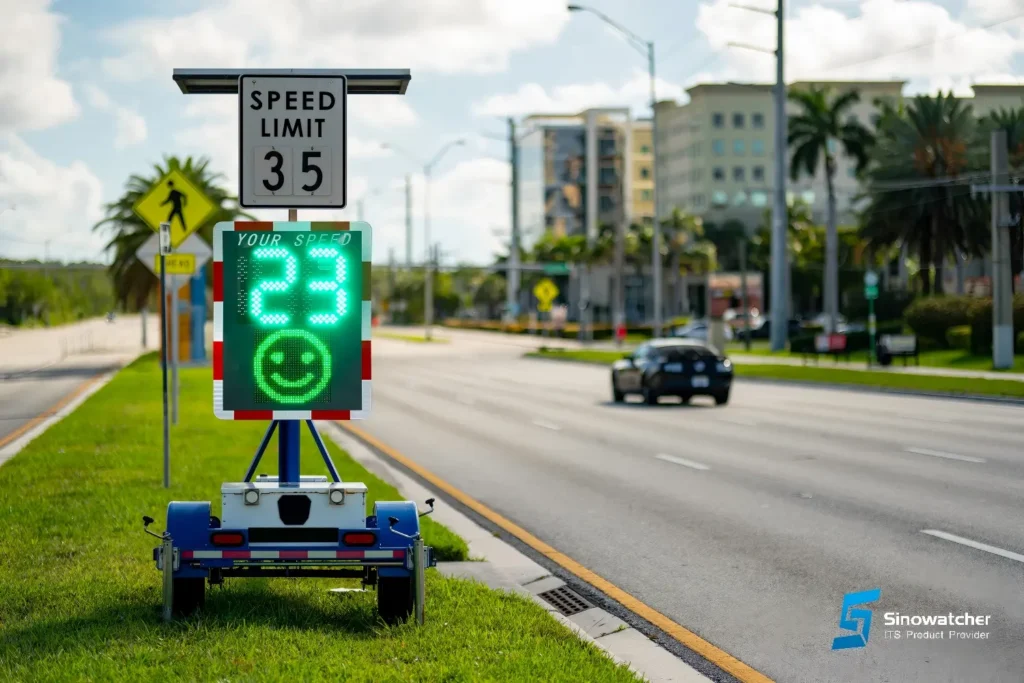
A vehicle speed sign can be installed before the active work zone to display the speed of approaching vehicles in real time. Temporary or mobile configurations allow the sign to be relocated as project requirements change.
The Sinowatcher Radar Speed Sign with Driver Feedback can be used for fixed, temporary, or mobile installations, depending on the selected configuration.
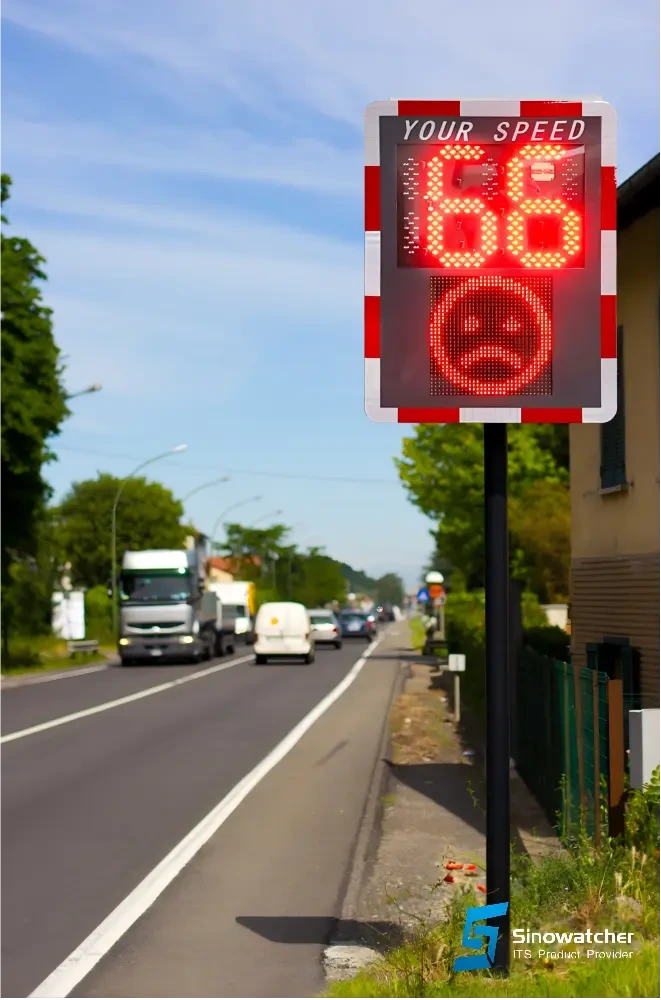
Why Is It Important for the Information to Be Easy to Understand?
Drivers have limited time to observe and interpret a sign while driving. For this reason, the information should be clear and easy to recognize.
A high-visibility LED display allows a vehicle speed sign to show vehicle speed clearly, while colors or symbols can reinforce the message when permitted by local regulations.
Clear visual information is especially important for a radar speed sign with driver feedback, because the driver needs to recognize the displayed speed quickly while approaching the sign.
More Than Just a Speed Sign
A radar speed sign with driver feedback can operate independently, but it can also form part of a more complete road safety system. Depending on the project, the system can be combined with warning beacons, pedestrian crossing systems, warning lights, traffic monitoring systems, and temporary equipment for work zones.
Some configurations can also record vehicle speed information. This data can later be used to analyze traffic conditions at the installation site.
In this way, the system can serve two main purposes: communicating with drivers by displaying their speed in real time and improving awareness of their driving behavior, and providing operators with speed data that can be used to monitor and analyze traffic conditions.
For traffic authorities, road contractors, and ITS integrators, selecting the right vehicle speed sign depends on the road environment, detection requirements, installation method, and project objectives.
Sinowatcher offers different Radar Speed Sign solutions with different display, detection, power, and installation configurations for a range of traffic management applications (Sinowatcher, n.d.).
Explore our Radar Speed Sign solutions or contact our team to select the right vehicle speed sign configuration for your project.
FAQ:
What Is a Radar Speed Sign with Driver Feedback?
A radar speed sign with driver feedback is a sign that uses radar to detect the speed of an approaching vehicle and display it to the driver in real time (Sinowatcher, 2026b).
Depending on the configuration, it can also use colors, symbols, or other visual elements to help drivers interpret the detected speed.
How Does a Vehicle Speed Sign Detect Speed?
A vehicle speed sign uses radar technology to measure the speed of an approaching vehicle.
The radar sends a signal toward the vehicle and analyzes the change that occurs when the signal is reflected. Using the Doppler principle, the system can calculate the vehicle’s speed (Sinowatcher, 2026b).
Can a Radar Speed Sign with Driver Feedback Operate with Solar Power?
Yes. Depending on the model and project configuration, a radar speed sign with driver feedback can use solar power, external power, or battery power.
Can the Speed Limit or Speed Threshold Be Configured?
Yes. The Sinowatcher Radar Speed Sign with Driver Feedback allows authorized users to configure different operating parameters, such as speed thresholds and operating schedules.
Can a Vehicle Speed Sign Record Speed Data?
Some vehicle speed sign configurations can store data locally and export it later for traffic analysis.
References
Sinowatcher. (2026a, July 23). School zone pedestrian crossing safety: How do radar speed signs manage vehicle speed?
Sinowatcher. (2026b, August 17). What is a radar speed sign and how does it work?
Sinowatcher. (n.d.). Radar speed sign. Retrieved September 16, 2026.