English
  Spanish
  French
  Russian
  Arabic
Traffic demand keeps growing worldwide, while road infrastructure in many countries and regions is approaching saturation. ITS (Intelligent Transportation Systems) offer a way to carry more traffic — more safely — on existing roads, making equipment upgrades a priority for many countries. Yet under ITS thinking, an intersection upgrade is no longer a simple traffic light replacement. ITS breaks the device-island model of traditional intersections: individual devices must be connected and work as one system. A modern upgrade therefore covers all equipment across three modules — Traffic Vehicle Detection System, Pedestrian Crossing Solution and Traffic Signal Control System — each composed of different devices, together serving traffic efficiency and safety.
Module 1: Traffic Vehicle Detection System — Giving the Intersection the Ability to Perceive
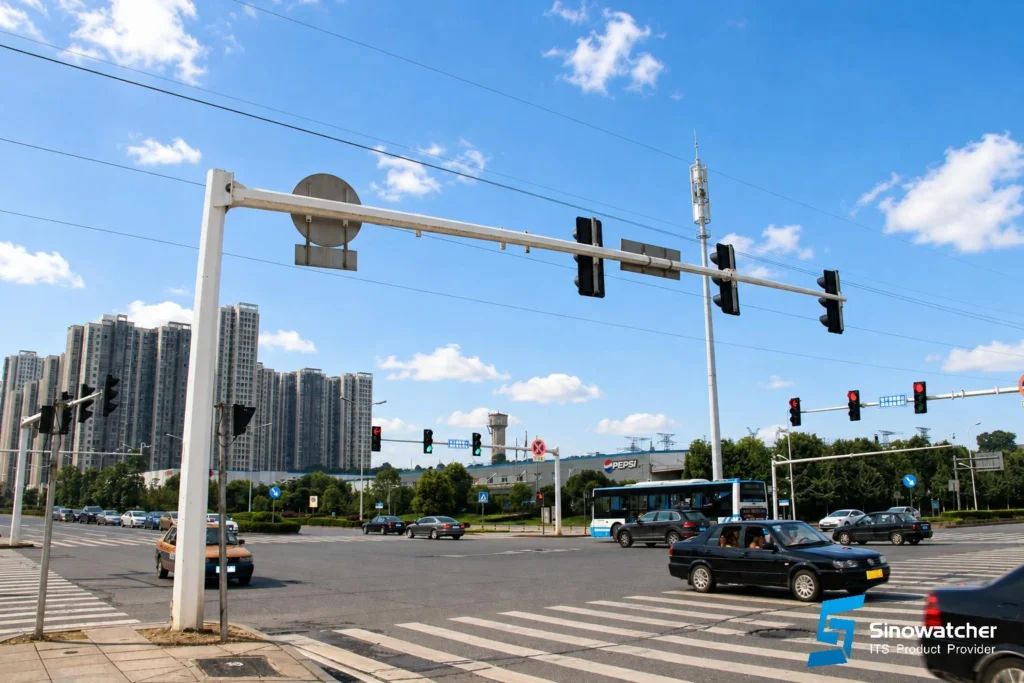
A Traffic Vehicle Detection System is an indispensable part of ITS: it gives the whole traffic system the ability to perceive the outside world — the very factor that separates intelligent from non-intelligent systems. Traditional devices merely execute fixed, rigid schemes and cannot adapt to actual traffic conditions, which wastes traffic resources. With detectors in place, the system collects vehicle-flow data (queue length, headway, average speed, etc.) as the input for other ITS devices to adjust intersection control adaptively, matching control to real demand. Common detectors and their best-fit scenarios:
- Loop detector: Mature technology with strong weather immunity, reliably collecting basic vehicle-flow data; requires pavement cutting, involves heavy construction, and coils are easily damaged by later road maintenance. Suited to conventional intersection upgrades with controlled budgets and basic detection needs only.
- Magnetometer detector: Small pavement holes, minimal road damage and wireless deployment make it a lightweight fit for ageing intersection retrofits; detection capability is basic, without vehicle classification or precise speed measurement. Better for low-volume side roads.
- Video detector: No pavement cutting required; simultaneously identifies motor vehicles, non-motor vehicles and pedestrians, with flexibly adjustable virtual detection zones; accuracy is affected by backlight, rain, snow and lens contamination. Suited to smart intersection retrofits where major road works are not allowed.
- Millimetre-wave radar detector: Excellent all-weather performance, unaffected by light, rain or fog; 4D millimetre-wave radar achieves multi-target precise positioning and queue-length measurement with convenient pole mounting. Higher upfront cost for high-performance models; mostly used on high-volume arterials and adaptive-signal-priority projects.
- LiDAR detector: Top-tier 3D perception accuracy that clearly separates mixed pedestrian-vehicle targets, with outstanding anti-glare capability; relatively expensive. Mostly used for integrated perception upgrades at core urban demonstration intersections and complex mixed-traffic crossings.
Match site conditions and actual demand against each detector’s performance and cost to select the best fit — that is how a Traffic Vehicle Detection System delivers perception capability for the urban intersection.
Module 2: Pedestrian Crossing Solution — Balancing Pedestrian Safety and Vehicle Throughput
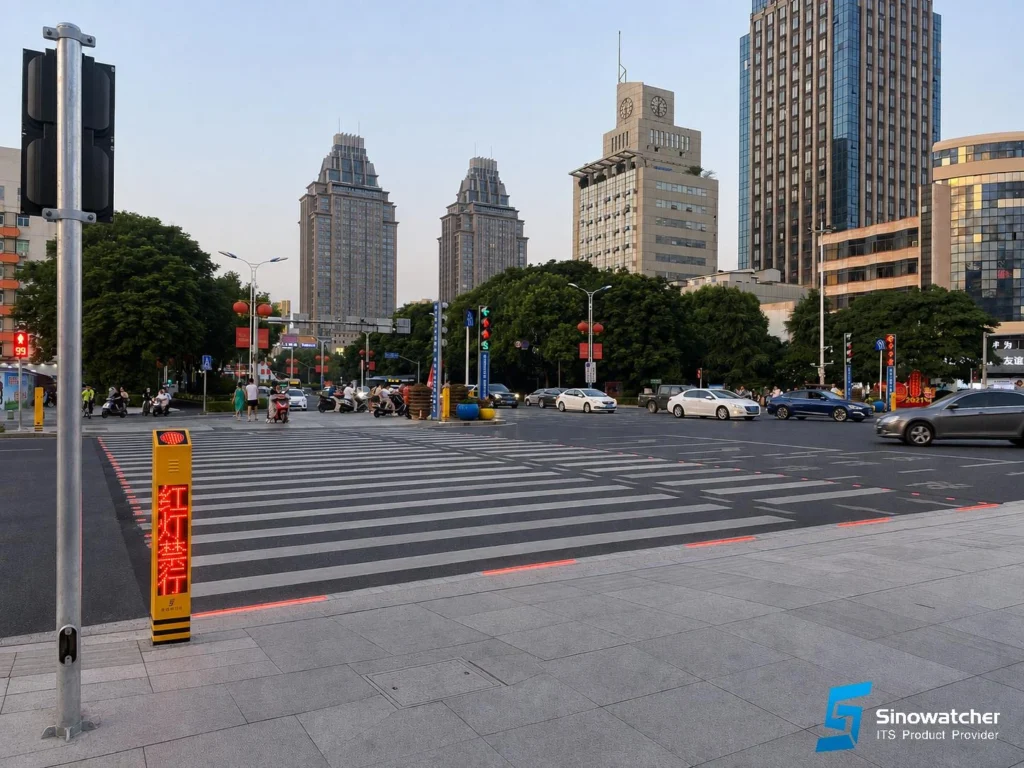
Pedestrians are a major group of road users who equally need dedicated equipment. A good Pedestrian Crossing Solution protects pedestrian safety and efficiency while also safeguarding vehicle throughput at crossings — which means it cannot focus on the pedestrian view alone: simply installing better pedestrian signals or fine-tuning pedestrian phases may come at the cost of vehicle capacity. Equipment must also convey crossing information through visual, audible and tactile channels, protecting pedestrians — including the visually and hearing impaired. A solution that serves both sides is built from:
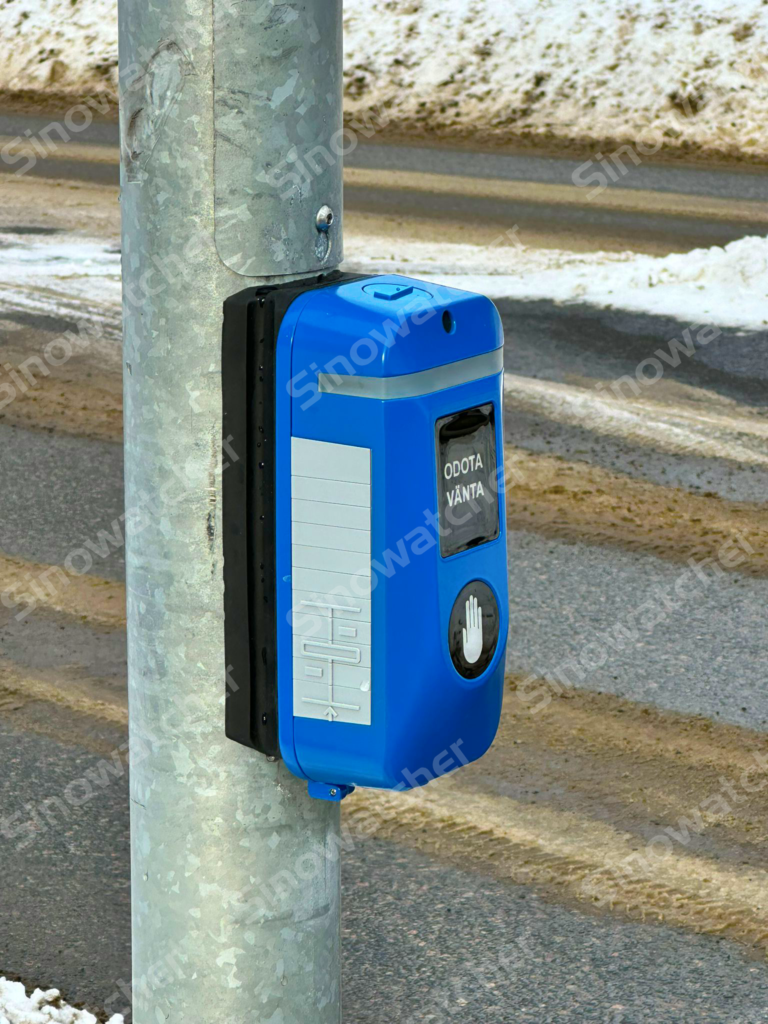
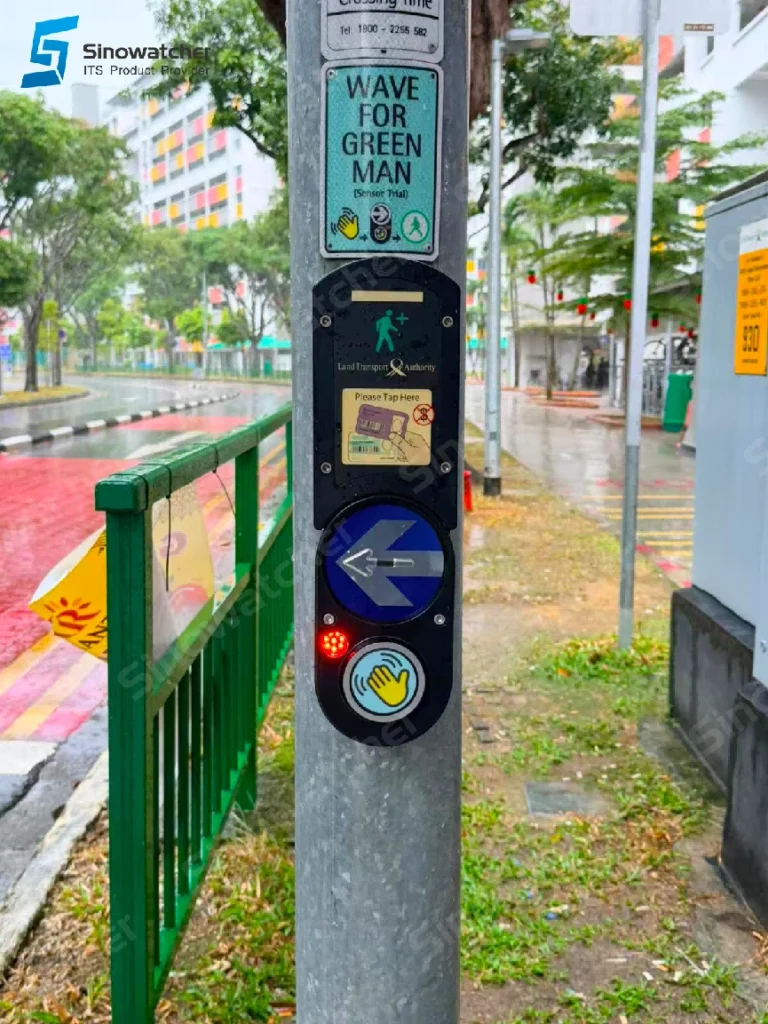
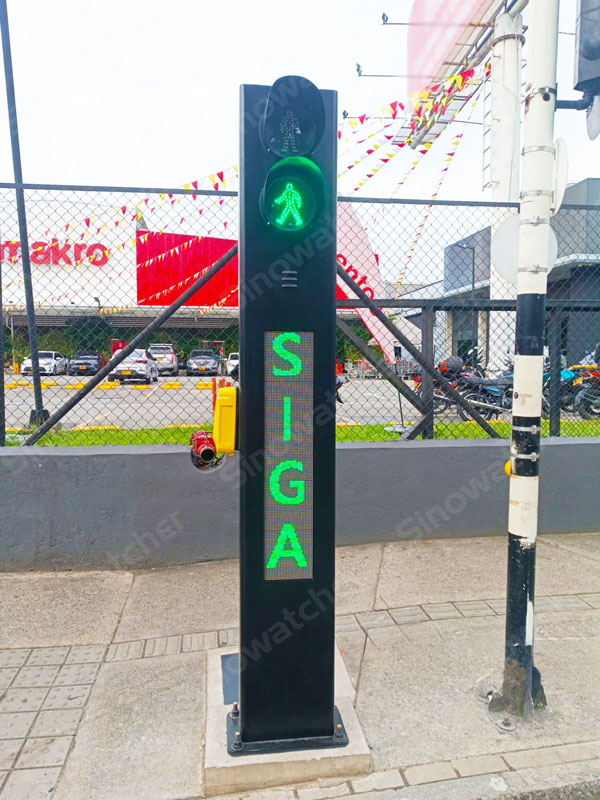
- Pedestrian push button: Suitable for almost all crossing scenarios, especially sporadic low-volume demand (suburbs, low-density areas) or regular high-volume demand (metro exits, bus stops, CBDs), where no amount of fixed-phase optimisation can avoid wasted vehicle time. The push button lets pedestrians actively request crossing, allocating right-of-way on demand and making full use of traffic resources.
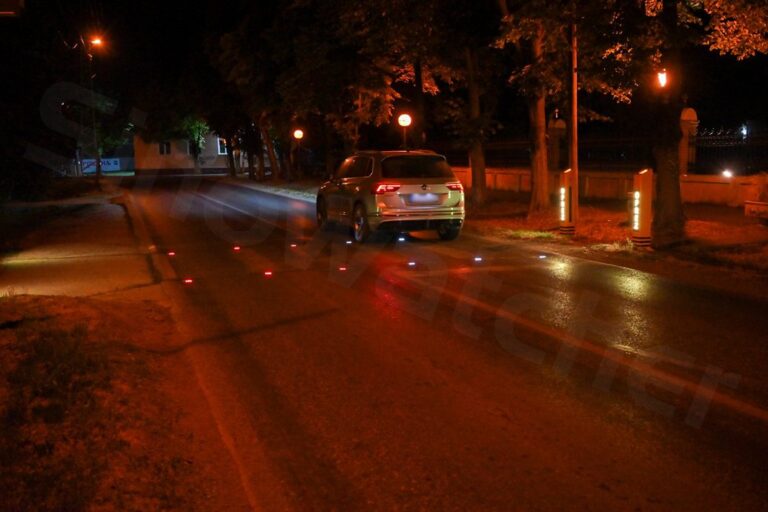
- Brick lights and road studs: Ground-level devices working in step with signal lights, running patterns that follow the current intersection phase. They extend signal visibility from more directions and with richer visual effects — telling drivers where the crossing boundaries and pedestrian signals are, giving pedestrians a clearer view of their signal, and alerting phone-distracted pedestrians.
- Acoustic device: The auditory pillar of a Pedestrian Crossing Solution: playing appropriate voice or sound prompts at each signal stage, in step with the pedestrian signal, so pedestrians can still judge the crossing state when visual conditions are poor — working alongside other devices to keep that judgement reliable.
Upgrading existing roadside equipment with these devices delivers a new Pedestrian Crossing Solution that protects the efficiency and safety of both pedestrians and vehicles, with particular care for the visually and hearing impaired.
Module 3: Traffic Signal Control System — The Decision Brain of the Smart Intersection
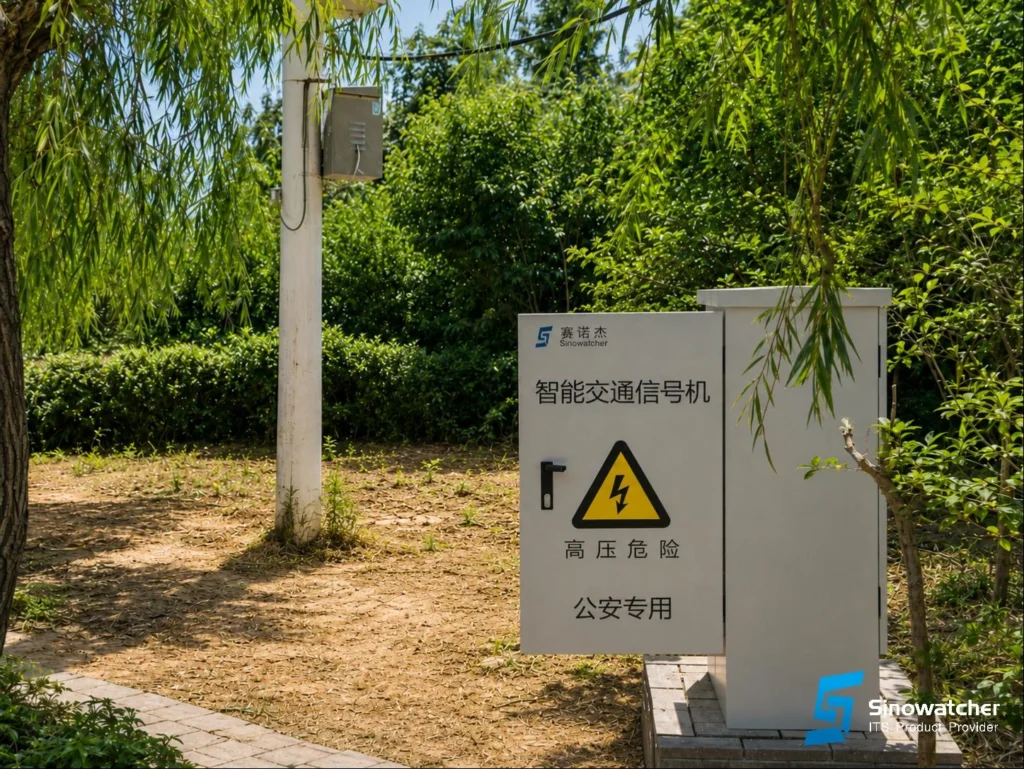
The Traffic Signal Control System is the decision centre of the entire smart intersection. Vehicle queue data collected by the Traffic Vehicle Detection System and pedestrian crossing requests gathered by the Pedestrian Crossing Solution all converge here for logical computation and command dispatch. If detectors are the eyes of the intersection and pedestrian devices are the terminals serving pedestrians, the Traffic Signal Control System is the brain — deciding phase sequencing and green durations and coordinating all devices.
A common pitfall in upgrade projects is treating a batch of new LED signal lights as a completed Traffic Signal Control System upgrade. In fact, refreshing light hardware alone cannot fix the wasted capacity caused by outdated control logic. A complete checklist should verify:
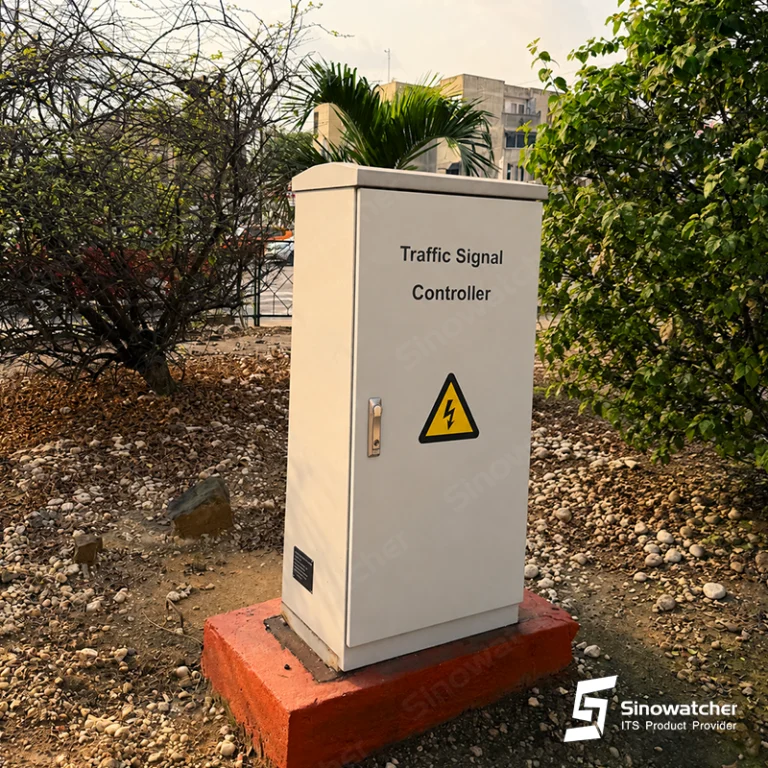
- Traffic signal controller: The core hardware must accept different detector types, receive push-button crossing requests, and interlock peripherals such as illuminated brick lights and acoustic poles. An excellent controller performs actuated control from real-time vehicle and pedestrian data, supports automatic switching among workday, holiday, and peak/off-peak timing plans, and can terminate phases early when no vehicles are detected — reallocating green time to busier directions and cutting wasted green time.
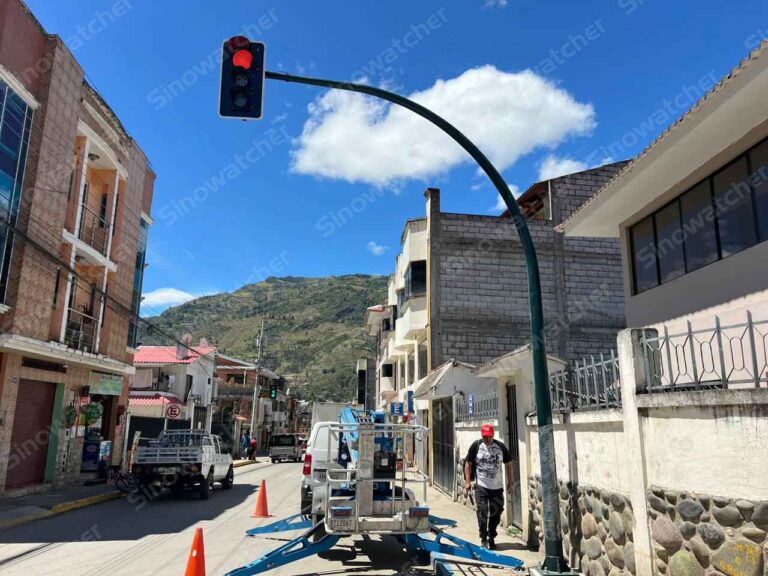
- Signal lights and countdown timer: High-reliability LED signal lights keep vehicle and pedestrian indications clearly visible; synchronised countdown timers show remaining time intuitively, helping drivers and pedestrians anticipate signal changes and reducing red-light running and hard braking. Note: under adaptive timing, the countdown timer must synchronise with the Traffic Signal Control System in real time to avoid mismatch between displayed and actual signals after green time is dynamically adjusted.
- Fail-safe protection: When detectors or peripherals suffer communication faults, the system should automatically fall back to an alternative scheme — yellow flash or fixed-time operation — so the intersection never loses control entirely. This fault tolerance is a check item that many upgrade projects must not overlook when selecting a Traffic Signal Control System.
Conclusion: One System, Not Scattered Devices
The Traffic Vehicle Detection System, Pedestrian Crossing Solution, and Traffic Signal Control System are not independent of each other. Detectors provide the perception input, the Pedestrian Crossing Solution addresses the needs of vulnerable road users, and the Traffic Signal Control System performs unified scheduling. Only when the three are deeply integrated can a project truly transform a traditional intersection into a smart ITS intersection, rather than a loose pile of new devices. A complete intersection upgrade checklist therefore verifies perception capability, pedestrian crossing facilities, and the interconnection compatibility of the signal control system, one by one.
If you are running an intersection upgrade ITS project, Sinowatcher provides full combinations of Traffic Vehicle Detection System, Pedestrian Crossing Solution, and Traffic Signal Control System equipment, with site-adapted selection and solution support.