English
  Spanish
  French
  Russian
  Arabic
Pedestrians represent one of the most vulnerable road user groups with substantial travel demand. Despite continuous improvements in urban road infrastructure, pedestrian-vehicle conflicts at crossings remain a top pedestrian crossing safety priority within modern ITS (Intelligent Transportation System) projects. Multiple contributing factors create high-risk hazards at pedestrian crossings, stemming from human behaviour of drivers and pedestrians, roadway layout, and adverse environmental conditions.
These risk factors include:
- Significant speed disparity between motor vehicles and pedestrians
- Insufficient driver attention and distraction
- Risk-taking psychology among both drivers and pedestrians
- Non-standard road layout with inadequate sight distance
- Degraded visibility caused by night-time, rain, fog and poor weather
- Variable crossing capabilities of elderly people, children and people with disabilities
- Non-compliant pedestrian road-crossing behaviour
- Multiple-stage crossing at large-scale intersections raising accident risks
- Limitations of conventional fixed-time traffic signal control that fails to respond to real-time demand
To address this complex set of risks, a pedestrian crossing solution cannot rely on a single product or isolated engineering adjustment. It requires a systematic approach to pedestrian crossing safety, combining roadway engineering design, intelligent roadside equipment, adaptive signal control and accessibility optimisation. Below we break down key considerations and corresponding mitigation strategies for ITS project design.
1. Pedestrian Crossing Safety Starts with Sufficient Sight Distance for Driver Recognition
Problem
Insufficient sight distance is a fundamental pedestrian crossing safety hazard. Even with functional traffic signals, if drivers cannot spot pedestrians early enough, crashes may still occur. Road geometry, roadside obstacles, and unreasonable stop-line layout can rob drivers of adequate observation space.
Solution
Road engineering design must fully account for drivers’ sight distance and viewing angles. The complete driver decision-making process includes a detection phase, a decision-making phase, and an execution phase. When designing intersections, designers need to calculate the total required stopping distance: this covers the driver’s reaction time plus vehicle braking distance.
Based on the designed road operating speed:
- Reserve clear sight triangles and remove roadside barriers blocking views
- Reasonably set stop-line position and crosswalk location to satisfy calculated stopping-distance requirements
- Adjust curve geometry and intersection viewing angles so drivers can detect waiting pedestrians far upstream of the crossing
This is the passive foundation of pedestrian crossing safety: no intelligent device can compensate for fundamentally flawed sight-line engineering.
2. How to Capture and Sustain Drivers’ Attention
Problem
Drivers may lose situational awareness due to fatigue, drunk driving, high-speed travel, or reduced perception under rain, fog, and nighttime conditions. Static road markings and conventional signs are easily overlooked.
Solution
Complement static engineering design with active visual ITS devices that draw driver attention in advance:
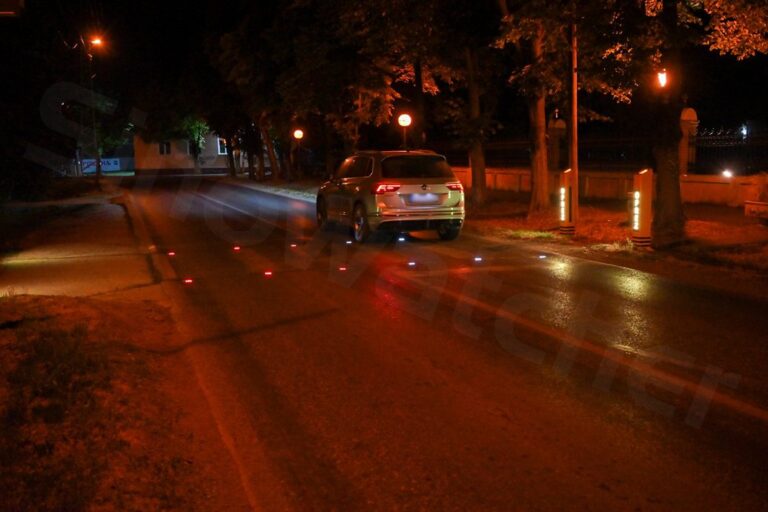
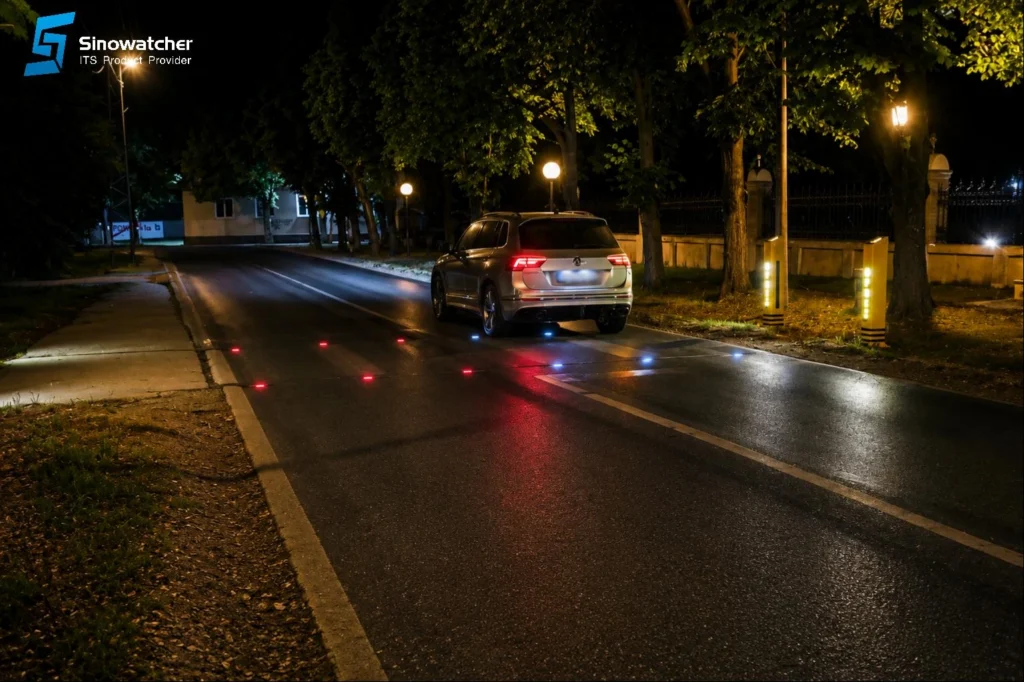
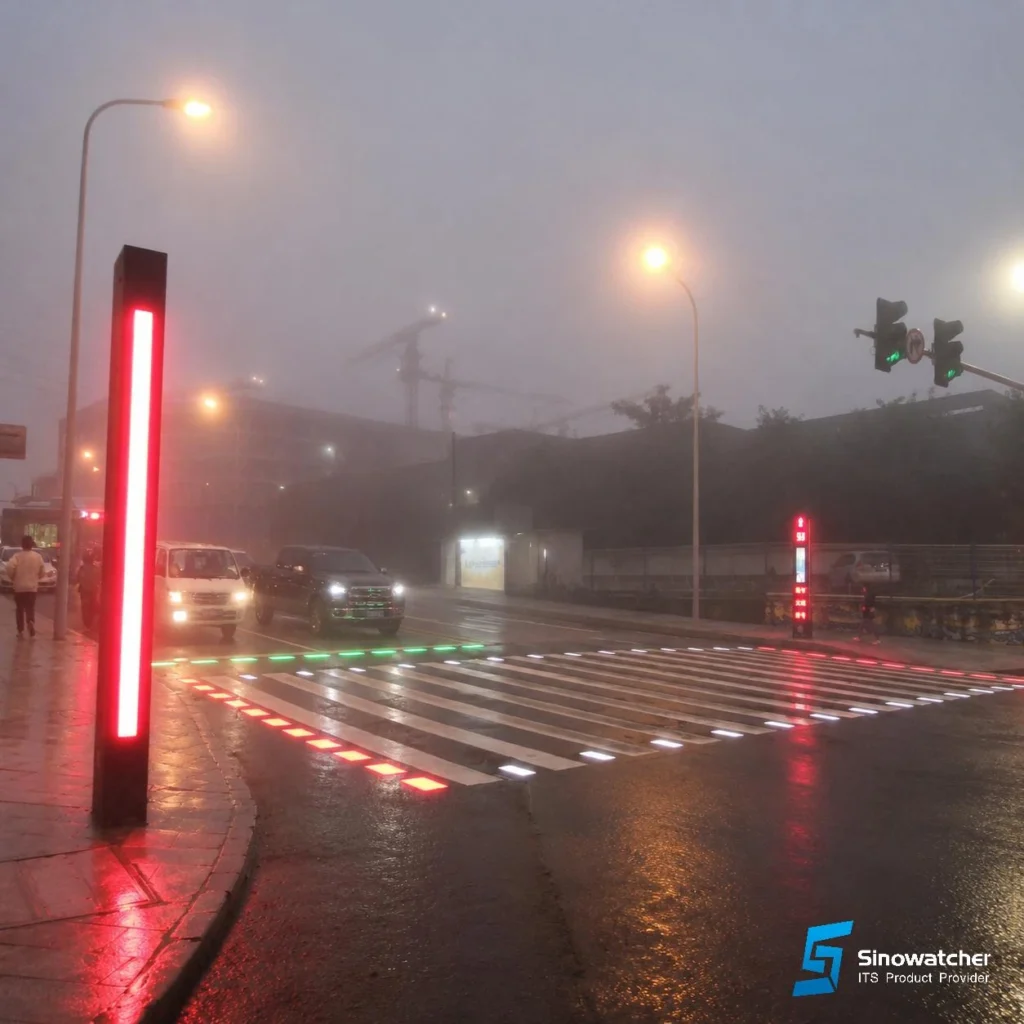
- Road studs and brick lights: Active illuminated road studs and crosswalk brick lights mark stop lines and crosswalk boundaries. They deliver high-visibility visual cues in darkness, rain and fog, helping drivers identify crossing zones from further away and prepare for deceleration.
- Upstream radar speed signs: Radar-activated dynamic speed display boards installed upstream of the pedestrian crossing remind drivers of their real-time travelling speed, alert speeding road users and encourage voluntary speed reduction before reaching the intersection.
- Warning beacons: For high-risk zones such as school zones and suburban arterial roads, add complementary warning beacons.
3. How to Mitigate Risks from Non-standard Pedestrian Behaviour
Problem
Pedestrians may ignore traffic signals, be distracted by mobile phones, or take risks when crossing roads, which creates conflict with moving traffic — one of the most common pedestrian crossing safety incidents.
Solution
Deploy active warning facilities, as the behavioural layer of a pedestrian crossing solution:
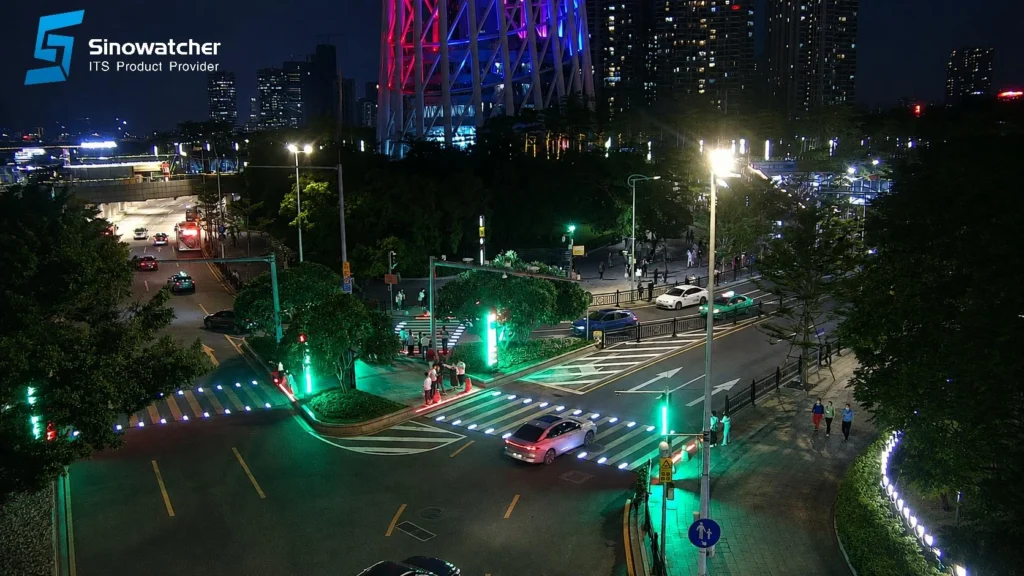
- Pedestrian warning bollards: Detection-enabled warning bollards identify jay-walking or early-crossing behaviour and trigger audible and visual alerts to remind pedestrians.
- Illuminated brick lights: Ground-level flashing lights embedded along crosswalk edges capture the attention of phone-distracted pedestrians who may not look up at overhead traffic lights.
Note: Equipment warning is supplementary. ITS projects should combine warning facilities with clear signage and adequate waiting-zone space for pedestrians.
4. Optimise Traffic Signal Control Beyond Fixed-time Schemes
Problem
Traditional fixed-time signal timings only switch by pre-set schedules. They cannot adapt to real-time fluctuations of pedestrian and vehicle volume. During peak hours, pedestrians may receive insufficient crossing duration; during off-peak hours, empty pedestrian phases waste road capacity for vehicle traffic.
Solution
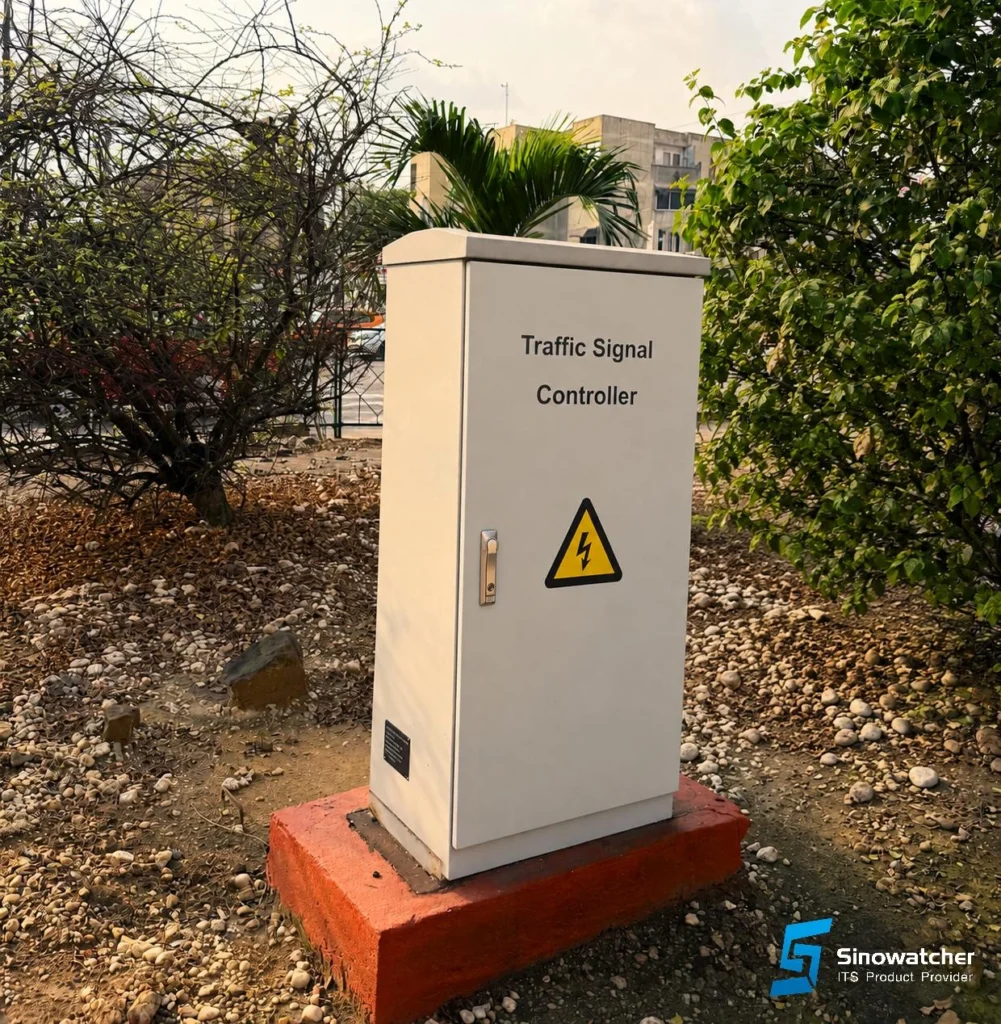
Signal control is the intelligent core of any pedestrian crossing safety solution:
- Collect historical and on-site data: Conduct manual surveys or deploy multi-function detectors to record pedestrian and vehicle flow during peak hours, off-peak hours, commuter rush and holidays, and build multiple timing plans matching different traffic patterns.
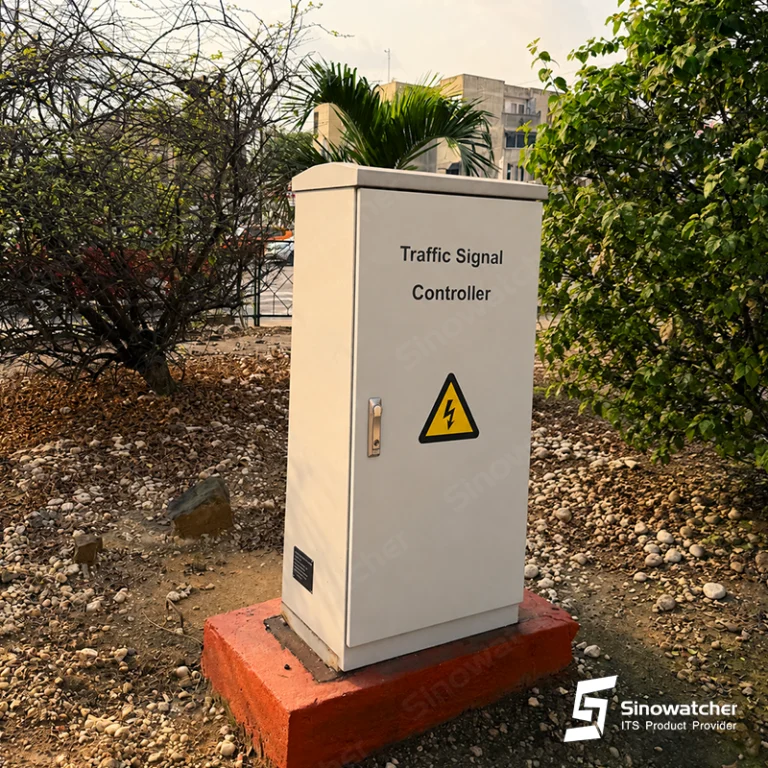
- Use controllers with annual automatic switching: Adopt traffic signal controllers supporting annual automatic switching. The system can toggle automatically among pre-programmed timing schemes for workdays, weekends and public holidays, without frequent manual on-site adjustment.
- Add semi-adaptive adjustment: Where conditions permit, introduce pedestrian/vehicle detectors to realise semi-adaptive signal adjustment, dynamically extending pedestrian green time according to real-time waiting pedestrian numbers.
5. Pedestrian Push Buttons: An On-demand Pedestrian Crossing Solution for Safer Crossings
Problem
Many suburban or semi-urban crossings feature consistently low pedestrian flow or clustered, burst-style pedestrian demand. Running fixed periodic pedestrian phases causes unnecessary vehicle delays, while fully fixed signals cannot guarantee safety for sporadic pedestrians.
Solution
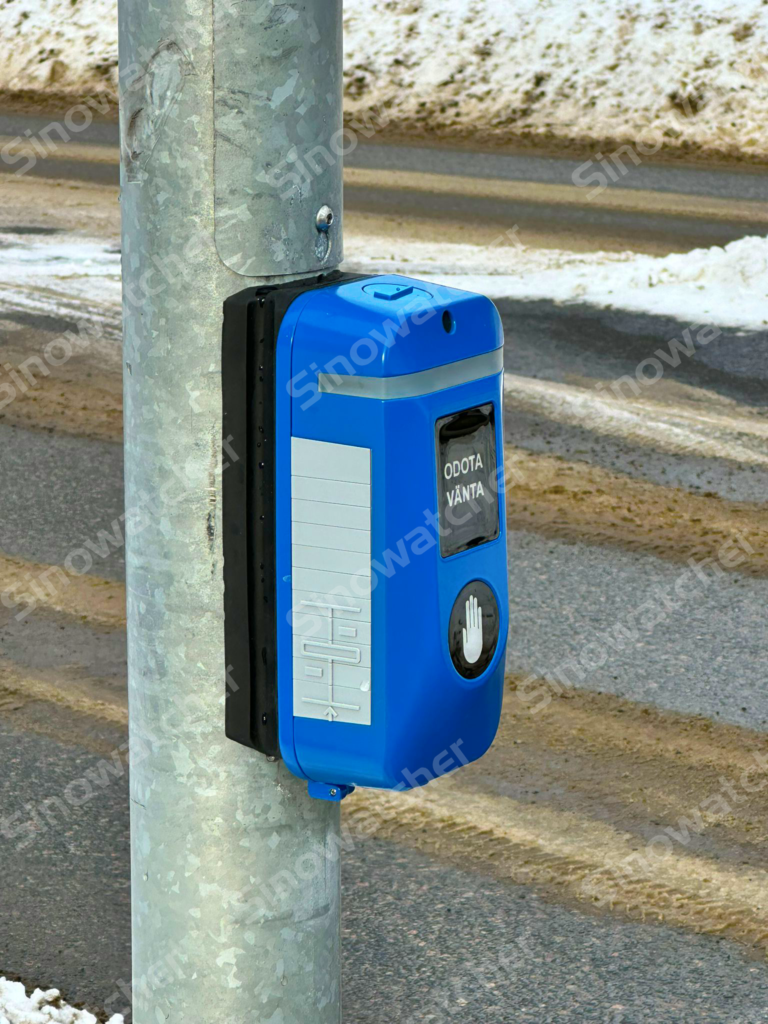
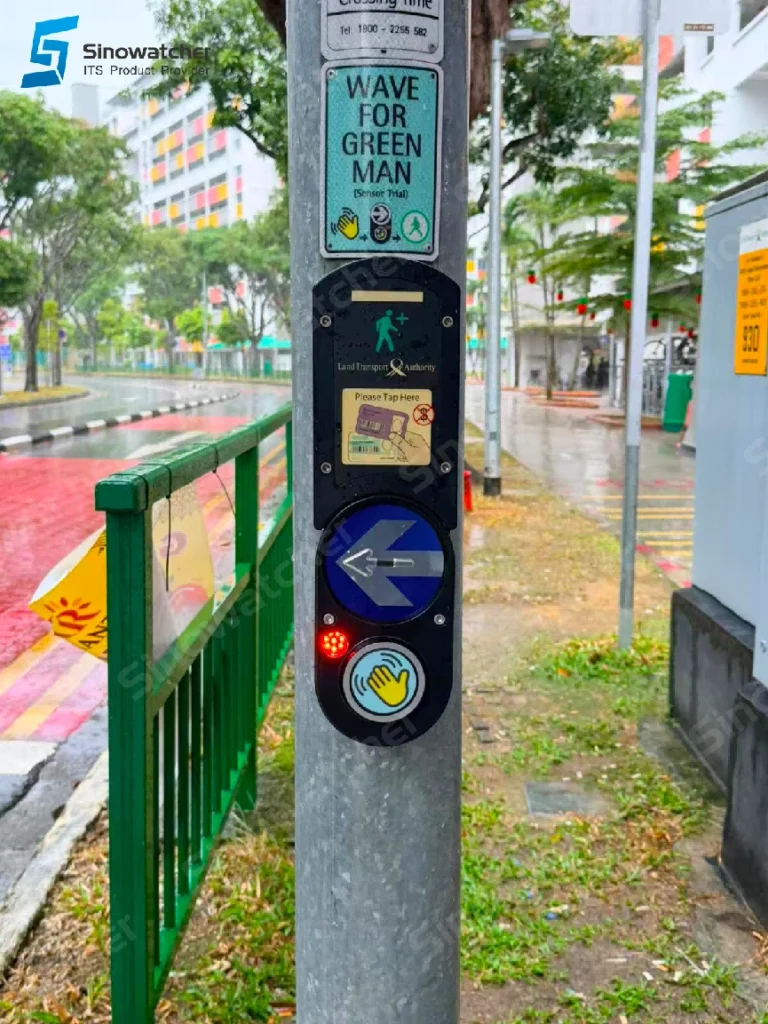
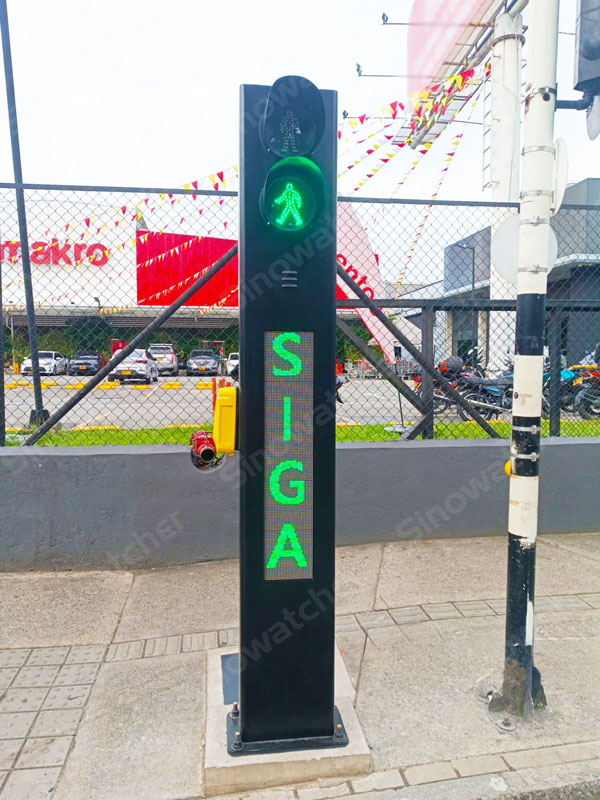
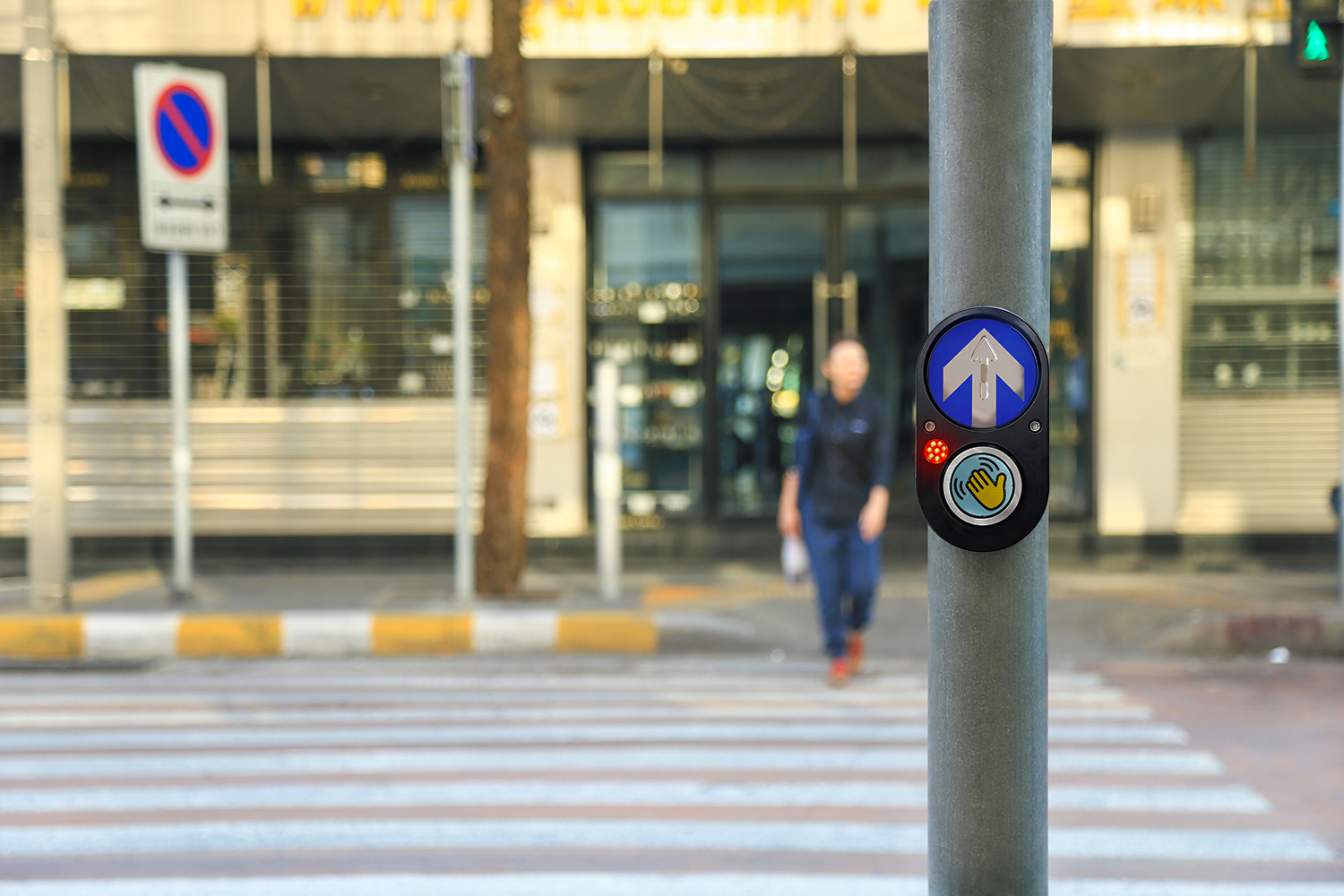
Install pedestrian push buttons coordinated with local traffic signal controllers to realise on-demand pedestrian green phases.
- On-demand phases: Pedestrians actively request crossing signals, so pedestrian phases are triggered only when needed, balancing pedestrian crossing safety and overall intersection throughput.
- Multi-modal accessibility: Well-designed push buttons provide multi-modal feedback — visual indicators, tactile touch points, and audible prompts — greatly improving accessibility for the visually impaired and people with disabilities and lowering barriers for vulnerable road users.
6. Accessibility Design for Vulnerable Road Users
Problem
Elderly people, children, and people with disabilities have different crossing speeds and perception capabilities. Conventional design often only considers average-speed adults, so slow-moving pedestrians may get stuck mid-crossing when green time expires.
Solution
A complete pedestrian crossing solution treats accessibility as an indispensable dimension of pedestrian crossing safety:
- Timing parameters: In signal timing calculation, adopt lower pedestrian walking-speed parameters to guarantee sufficient crossing time for slow-moving users.
- Audible assistance: Combine audible signal outputs from pedestrian push buttons and warning bollards for visually-impaired users.
- Engineering measures: Provide curb ramps, wide pedestrian waiting areas and central refuge islands for multi-stage crossing at large intersections. On wide arterial roads, refuge islands split long crossing distances into shorter segments, lowering risk for slow-moving pedestrians.
7. Environment-oriented Resilience for Harsh Weather Conditions
Problem
Night-time, rain and fog reduce visibility for both drivers and pedestrians. Ordinary paint-based markings fade or become hard to recognise on wet road surfaces.
Solution
Sustaining pedestrian crossing safety in harsh weather calls for combining passive and active visibility measures:
- Active + passive visibility: Combine passive reflective markings with active lighting devices such as brick lights and road studs. Active illumination maintains recognisability under rain, fog and dark nights, compensating for the deficiency of purely reflective materials.
- Ambient lighting: Co-ordinate intersection ambient lighting: ensure crosswalk zones get proper road lighting, and avoid strong backlight that creates glare for drivers.
Conclusion:
Designing a safer pedestrian crossing is never about a single product or a one-off fix. It is a systematic engineering practice that starts with solid sight-distance and roadway fundamentals, reinforces them with active ITS devices — illuminated road studs, brick lights, radar speed signs and warning bollards — and brings intelligence into signal control through multi-plan timing, annual automatic switching and on-demand push-button crossings. On top of this, accessibility for vulnerable road users and resilience against harsh weather ensure the solution protects every pedestrian, in every condition. By addressing these seven factors together, a well-designed pedestrian crossing solution can transform crossings from high-risk conflict points into genuinely safe, efficient and inclusive components of the urban road network.