English
 Spanish
 French
 Russian
 Arabic

Behind every traffic signal installed at an intersection is a manufacturing process that begins with component selection and continues through electronic production, assembly, and functional testing.
Although the finished product is what ultimately reaches the customer, each stage contributes to its technical characteristics and its ability to perform under the intended operating conditions.
Founded in 2012 and based in Shenzhen, China, Sinowatcher is a traffic signals company specializing in the development and manufacture of intelligent traffic signaling and road safety solutions. With in-house electronic manufacturing, product development, and quality inspection capabilities, we support international ITS projects with reliable traffic equipment.
Below, we explore the key manufacturing activities and technical evaluation procedures that form part of Sinowatcher’s industrial capabilities.
1. The Starting Point: Traffic Signal Components
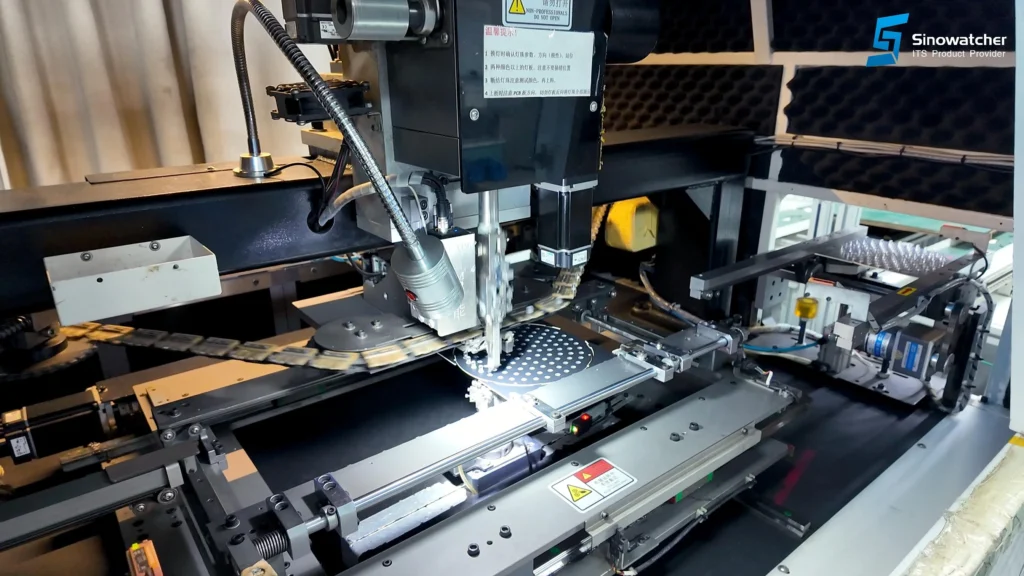
The manufacturing of an LED traffic signal begins with a range of components that are subsequently integrated into a fully functional unit. These include printed circuit boards (PCBs), LEDs, power supplies, optical components, housings, and other electrical and mechanical parts. As an experienced traffic signals company, Sinowatcher focuses on component selection and manufacturing quality to support the production of reliable traffic signaling equipment.
Each component serves a specific function. PCBs integrate the electronic circuits required for operation; LEDs produce the illuminated signal indications; lenses control light distribution; and the housing provides physical protection.
Before these components enter production, their characteristics must be checked against the required specifications. For this reason, Sinowatcher incorporates incoming material inspection into its traffic signal quality control procedures. These inspections help assess component characteristics and identify potential nonconformities before materials are released for production.
This establishes the first quality control checkpoint in the manufacturing process, ensuring that incoming materials meet the required specifications before proceeding to subsequent production stages.
2. Electronic Manufacturing and Product Assembly
Following incoming material inspection, the process moves to electronic manufacturing, where the components required for traffic signaling equipment are integrated.
Sinowatcher operates SMT (Surface Mount Technology) and DIP (Dual In-line Package) production equipment, two technologies used in electronic circuit assembly. SMT enables components to be mounted directly onto the surface of printed circuit boards (PCBs), while DIP processes support the installation of through-hole components.
At this stage, accurate component placement and the integrity of electrical connections are essential, as assembly defects may compromise circuit functionality. These production activities also form an important part of traffic signal quality control, helping maintain assembly consistency and the reliability of electronic components.
Once the circuit boards have been manufactured, they are integrated with other components to form the finished product. In an LED traffic signal, these include light modules, electrical connections, optical elements, and the housing.
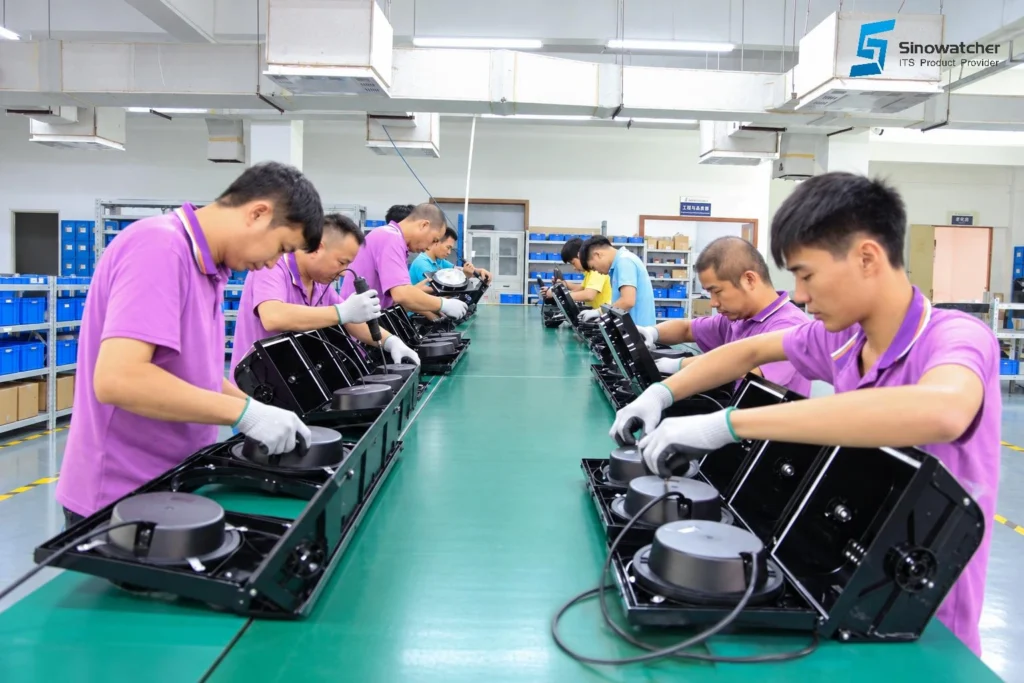
Proper integration is essential because the equipment’s performance depends not only on the characteristics of individual components but also on how effectively they function together.
Through electronic manufacturing and assembly, individual components are transformed into an integrated Sinowatcher traffic signal unit, ready for the required inspections and performance tests.
3. Traffic Signal Quality Control: From Initial Functionality to Operational Stability
Once the equipment has been assembled, quality testing is carried out to evaluate different aspects of its performance.
These inspections go beyond verifying that the traffic signal illuminates correctly. They also assess the optical characteristics of LED modules and their behavior under different operating conditions.
Optical Performance Evaluation
The visibility of LED traffic signals depends on several optical parameters, including luminous intensity, light distribution, and chromatic characteristics.
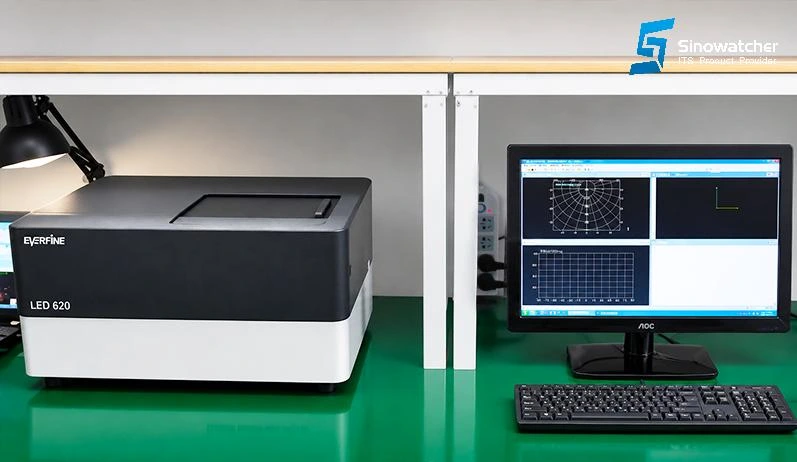
Sinowatcher uses specialized optical measurement equipment to evaluate parameters such as luminous intensity, wavelength, and light distribution.
These measurements help assess the optical properties of LED components and modules and verify their conformity with established technical specifications.
Extended Functional Testing
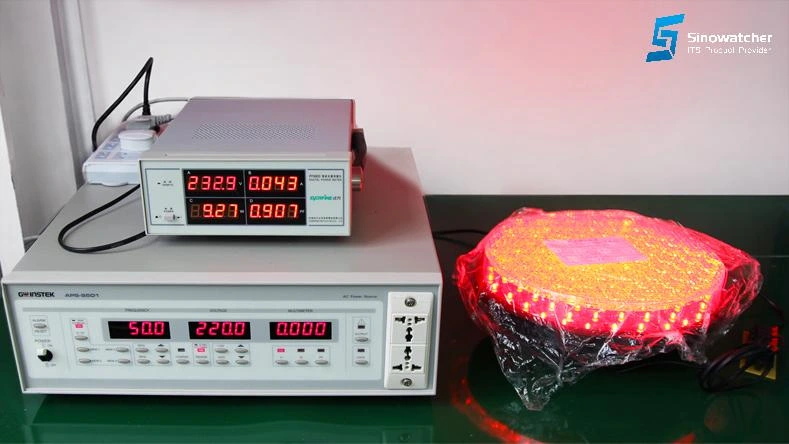
In addition to optical measurements, functional tests are conducted to evaluate module performance during different operating conditions. These procedures include intermittent operation and continuous illumination testing to assess operational stability and identify potential abnormalities.
During these tests, inspectors can identify issues such as illumination failures, variations in light output, or unexpected LED behavior. The results help evaluate product functionality and support consistent quality control before products proceed to subsequent stages.
Environmental Resistance Evaluation
Traffic signaling equipment is designed to operate in outdoor environments where temperature fluctuations, humidity, vibration, and corrosive conditions may occur.
These conditions make it necessary to assess material properties and component performance under environmental stress.
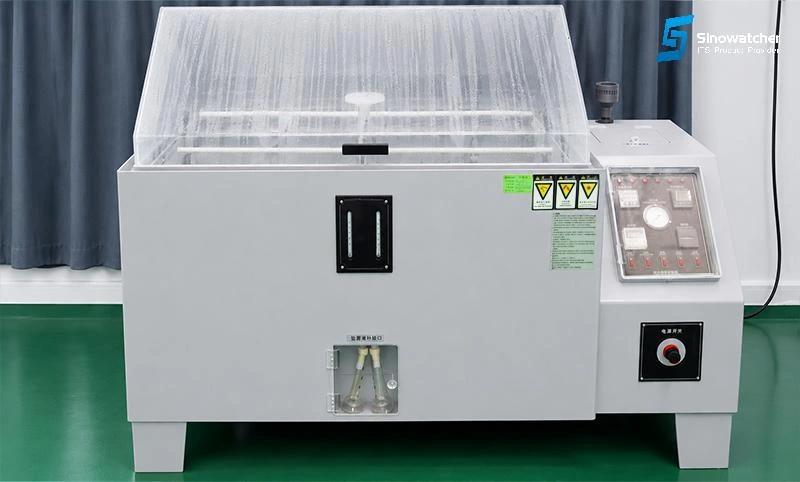
Sinowatcher’s testing capabilities include equipment for temperature, humidity, vibration, and corrosion resistance testing. Each test focuses on specific performance characteristics.
Thermal testing evaluates the behavior of equipment or components under defined temperature conditions, while humidity testing assesses their response to controlled environmental exposure.
Vibration testing is used to examine how equipment responds to specified mechanical stresses. For metallic components, salt spray testing is conducted to assess corrosion resistance. These evaluations provide technical information about the properties being examined and support the assessment of product suitability for outdoor applications.
Environmental testing therefore complements optical and functional assessments, expanding the range of performance characteristics evaluated during quality inspection.
4. Quality Backed by International Certifications and Standards
Confidence in a traffic signal manufacturer is built on controlled production processes, technical verification, and compliance with internationally recognized requirements.
At Sinowatcher, our commitment to quality is supported by ISO 9001:2015 certification of our quality management system, providing a framework for standardized processes, operational control, and continual improvement.
This approach is complemented by products developed to meet the requirements of different markets. Sinowatcher references conformity with CE and RoHS requirements, as well as EN 12368 for applicable product lines, including LED traffic signal models intended for road signaling projects.
For distributors, contractors, and ITS system integrators, working with a traffic signals supplier that maintains a certified quality management system and product conformity documentation provides an advantage when evaluating suppliers and preparing commercial proposals.
At Sinowatcher, quality is supported both by manufacturing inspections and by our commitment to delivering solutions aligned with internationally recognized standards and requirements.
5. Conclusion
Manufacturing a traffic signal requires the integration of electronic components, precise assembly processes, and technical inspections to evaluate performance before the equipment is put into service.
At Sinowatcher, our electronic manufacturing capabilities are complemented by inspection procedures, technical testing, and an internationally certified quality management system. For distributors, contractors, and ITS system integrators, these capabilities are important considerations when selecting a manufacturer capable of meeting the technical requirements of their projects.
6. FAQ
Why are international certifications important when evaluating a manufacturer’s quality standards?
Certifications provide evidence of compliance with internationally recognized requirements. For a traffic signals company, ISO 9001 certification confirms that it operates a certified quality management system, helping build customer confidence, support supplier evaluations, and strengthen international business relationships.
Why is it important to conduct quality inspections during production rather than only at the final stage?
Effective traffic signal quality control involves inspections throughout the manufacturing process, rather than relying solely on final product testing. In-process inspections help detect and correct defects before they progress to subsequent manufacturing stages, reducing rework, minimizing material waste, and contributing to consistent production quality.
How does process standardization help maintain consistent quality?
Standardized procedures establish uniform work instructions and acceptance criteria. This reduces production variability, facilitates supervision, and helps maintain consistent results across manufacturing batches.
What happens when a nonconformity is identified during an inspection?
The nonconformity is identified and assessed to determine the appropriate action, such as correction, rework, or rejection. Where necessary, root causes are investigated, and corrective actions are implemented to prevent recurrence.
How can quality control data be used to continuously improve manufacturing processes?
Inspection records help identify recurring defects, process deviations, and improvement opportunities. Analyzing this data supports process optimization, strengthens quality controls, and helps reduce future errors.