English
  Spanish
  French
  Russian
  Arabic
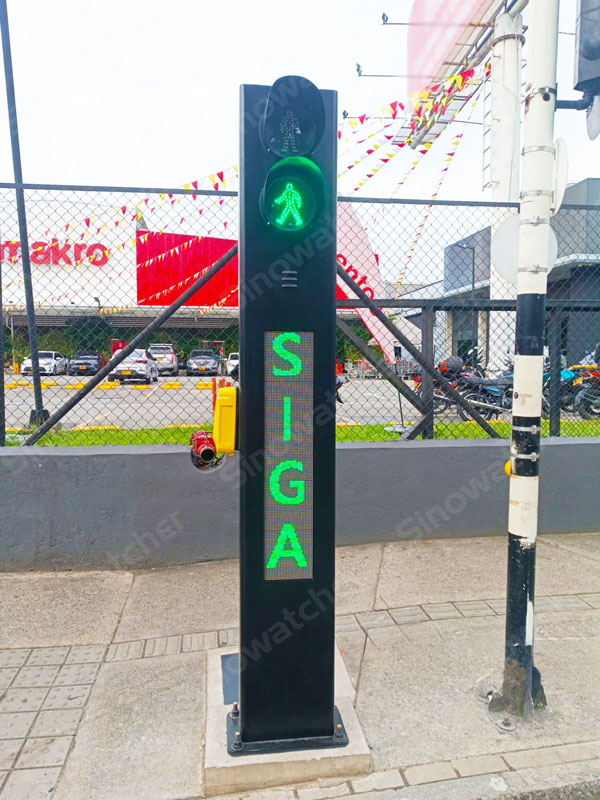
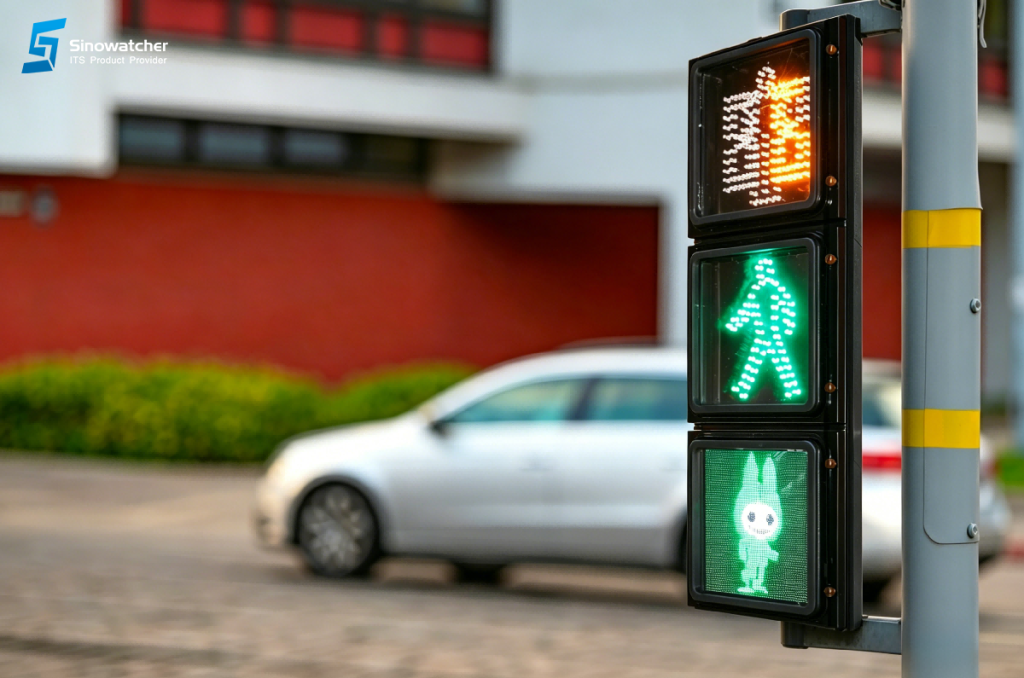
Imagine waiting at a crosswalk and, instead of a conventional red/green pedestrian light, you are presented with a dynamic, high-definition visual signal that immediately captures attention.
This is not a conceptual innovation; it’s a practical upgrade in pedestrian traffic control. The Full-Color Matrix Pedestrian Signal introduces a new level of flexibility, visibility, and communication in modern intersections.
As cities evolve toward more adaptive infrastructure, traditional static signals are increasingly insufficient. The development of the smart pedestrian crosswalk requires solutions that are not only visible but also responsive and configurable.
Rethinking Pedestrian Traffic Control in Modern Cities
Conventional pedestrian signals rely on fixed LED icons that provide limited interaction. While historically effective, they are less capable of addressing modern challenges such as distracted pedestrians and complex urban traffic flows.
In current pedestrian traffic control scenarios, attention capture is critical. Static signals often fail to deliver sufficient visual impact, especially in environments with high ambient distractions.
The Full-Color Matrix Pedestrian Signal addresses this gap by transforming passive signals into active communication interfaces, improving visibility and enhancing response time.
What Is a Full-Color Matrix Pedestrian Signal?
A Full-Color Matrix Pedestrian Signal replaces traditional fixed LED symbols with a programmable LED matrix integrated into standard traffic signal housing.
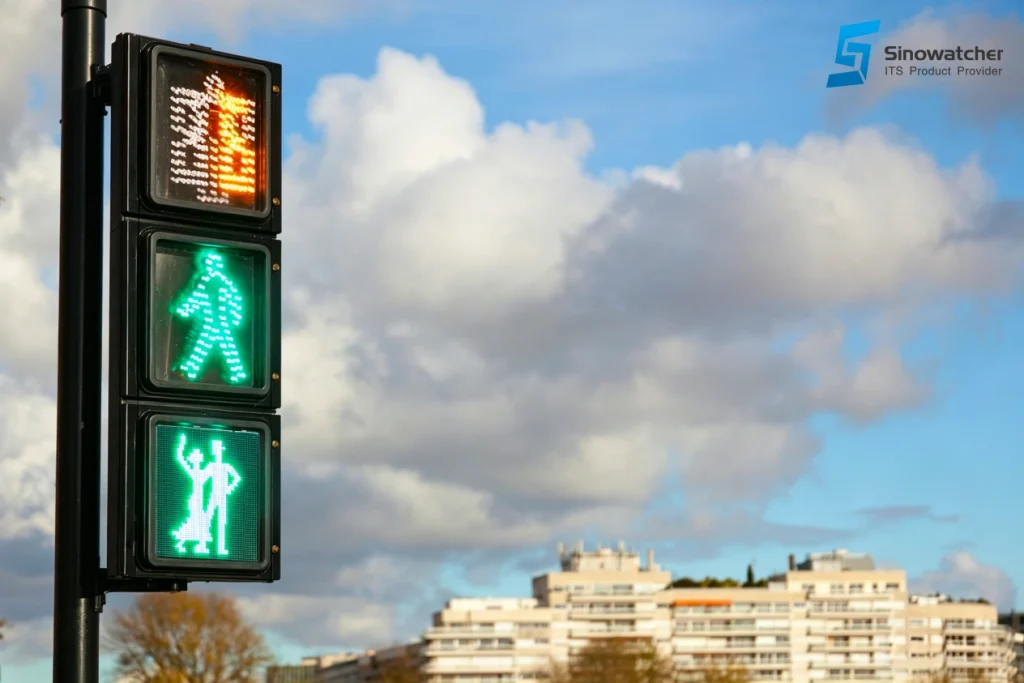
Key specifications include:
- Pixel Pitch: P3 (high-resolution display)
- Module Size: 192 mm × 192 mm
- Pixel Quantity: 4,096 pixels
- High refresh rate for smooth animation output
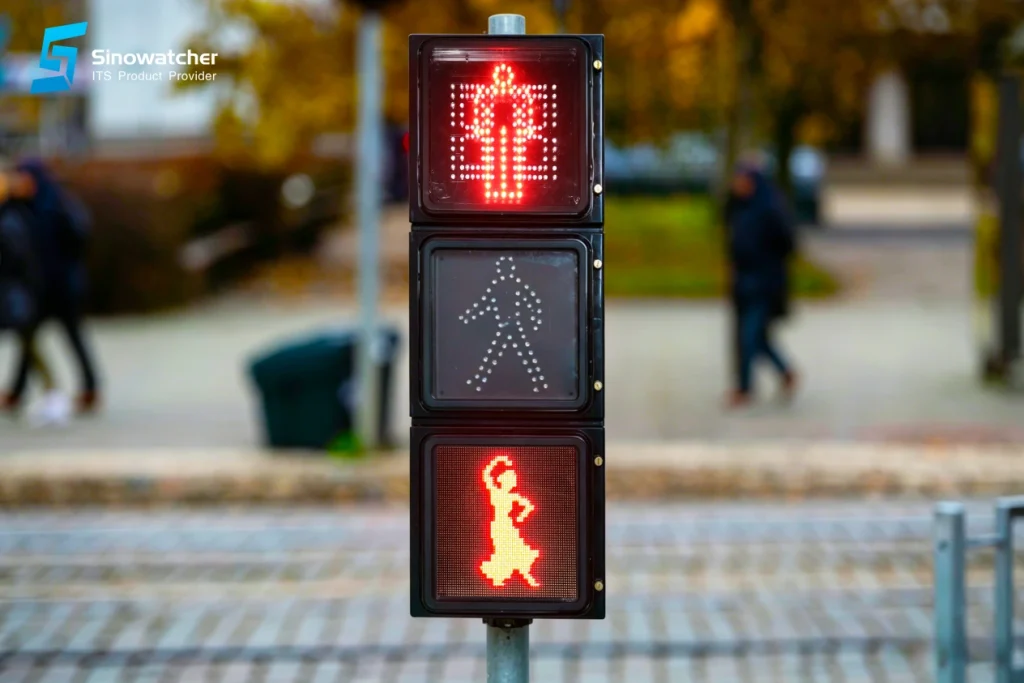
This configuration enables the display of dynamic content such as directional guidance, warnings, or animated cues, significantly improving effectiveness compared to static signals.
Enabling the Smart Pedestrian Crosswalk
The concept of the smart pedestrian crosswalk represents a shift from static infrastructure to adaptive traffic systems.
By integrating Full-Color Matrix Pedestrian Signals, cities can:
- Improve visibility through dynamic visual communication
- Adapt signal behavior to different traffic scenarios
- Enhance interaction between pedestrians and traffic systems
This capability is essential for building safer and more responsive urban mobility systems.
Where Full-Color Matrix Pedestrian Signals Deliver the Most Value
- School Zones and Campuses
Children respond better to visual stimuli. Dynamic animations improve compliance and enhance pedestrian traffic control effectiveness in sensitive areas. - Tourist and Cultural Districts
Cities can integrate localized visual content into the smart pedestrian crosswalk, reinforcing cultural identity while maintaining safety. - High-Risk Intersections
At locations with frequent pedestrian-vehicle conflicts, dynamic signals significantly outperform static lights by capturing peripheral attention, critical for distracted pedestrians. - Event-Based Traffic Management
For large gatherings, signals can display directional guidance, temporary instructions, or warnings, supporting flexible pedestrian traffic control strategies.
Beyond Visual Signals: Accessibility Integration
Effective pedestrian traffic control must also address accessibility requirements. Full-Color Matrix systems can be integrated with acoustic devices to provide:
- Voice guidance for visually impaired pedestrians
- Configurable audio signals for different traffic states
- Multi-language support
This ensures that the smart pedestrian crosswalk is inclusive and compliant with evolving urban accessibility standards.
The Future of Pedestrian Traffic Control
Urban traffic infrastructure is transitioning toward adaptive, data-driven systems. The Full-Color Matrix Pedestrian Signal supports this transition by enabling:
- Real-time communication
- Flexible signal configuration
- Improved interaction between users and infrastructure
As cities continue investing in smart pedestrian crosswalk solutions, this technology is expected to become a standard component of next-generation pedestrian traffic control systems.
Upgrade Your Pedestrian Traffic Control System
Looking to improve your pedestrian traffic control with more adaptive and scalable solutions?
The Sinowatcher Full-Color Matrix Pedestrian Signal provides a practical approach to building modern smart pedestrian crosswalk systems, suitable for both new deployments and infrastructure upgrades.
Contact our team to request technical details, discuss your project requirements, or explore integration options for your next traffic project.