English
  Spanish
  French
  Russian
  Arabic
As cities continue modernizing urban intersections and intelligent transportation systems, pedestrian crossing infrastructure is also evolving rapidly. New technologies such as contactless activation, radar sensing, and AI-assisted pedestrian request systems are becoming increasingly common in smart city deployments.
However, despite these advancements, mechanical pedestrian push buttons continue to play a critical role in modern traffic systems worldwide. From dense urban corridors to suburban crossings and transport terminals, many cities still rely heavily on mechanical pedestrian push buttons as part of their accessible pedestrian crossing infrastructure.
This is not simply about tradition or legacy infrastructure. In reality, modern pedestrian request systems must balance reliability, accessibility, operational simplicity, and long-term maintenance efficiency.
Mechanical Pedestrian Push Buttons and Urban Traffic Operations
Modern pedestrian crossing solutions are designed to improve the interaction between pedestrians and traffic signal controllers. Instead of running pedestrian phases continuously, intersections can activate crossing sequences only when a pedestrian request is detected.
This demand-responsive logic helps optimize signal timing, reduce unnecessary delays, and improve vehicle progression along urban corridors.
Within these systems, mechanical pedestrian push buttons remain one of the most dependable activation methods. Unlike passive detection technologies, physical push buttons provide direct user confirmation and predictable controller communication.
At busy intersections, this type of tactile interaction still plays an important role in pedestrian confidence, especially in locations with heavy traffic volumes or complex crossing layouts.
As cities continue upgrading intelligent transportation systems, many traffic engineers still prefer activation devices that can integrate smoothly into both modern and legacy infrastructure.
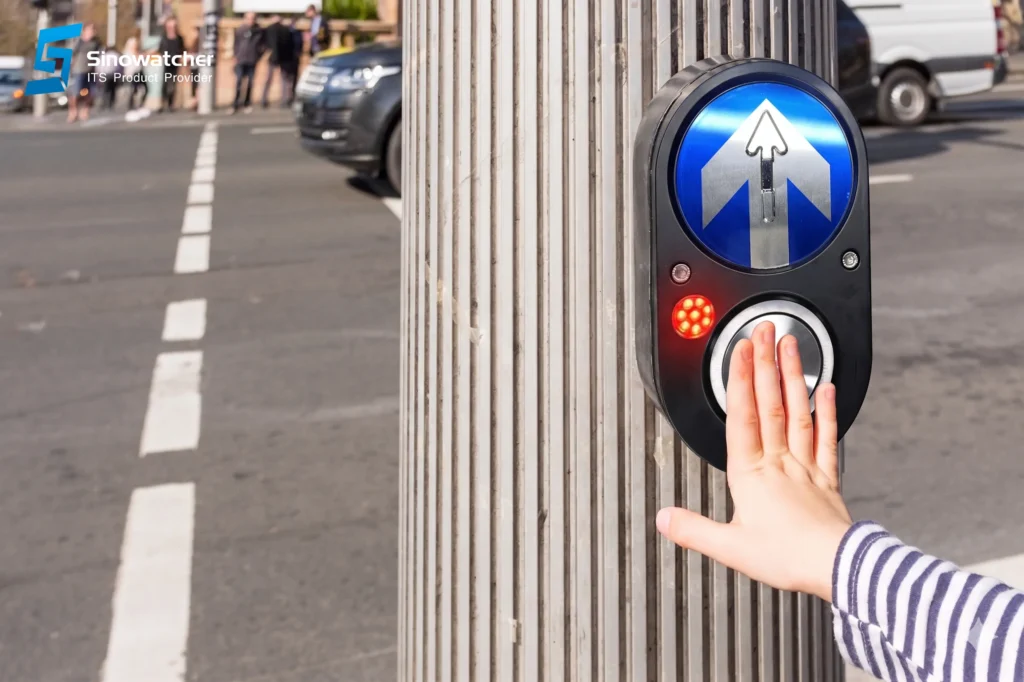
Why Cities Still Choose Mechanical Pedestrian Push Buttons
Although contactless systems continue gaining attention, mechanical pedestrian push buttons are still widely selected for practical engineering reasons.
One major advantage is integration simplicity. Mechanical activation systems typically rely on stable dry-contact signaling, allowing them to work reliably with existing traffic controllers and conventional pedestrian crossing requests.
Environmental durability is another important factor. Outdoor traffic equipment must operate continuously under rain, dust, heat, humidity, snow, and vandal-prone urban conditions. Mechanical push buttons are often favored because they require less environmental calibration and maintain stable performance over long operational cycles.
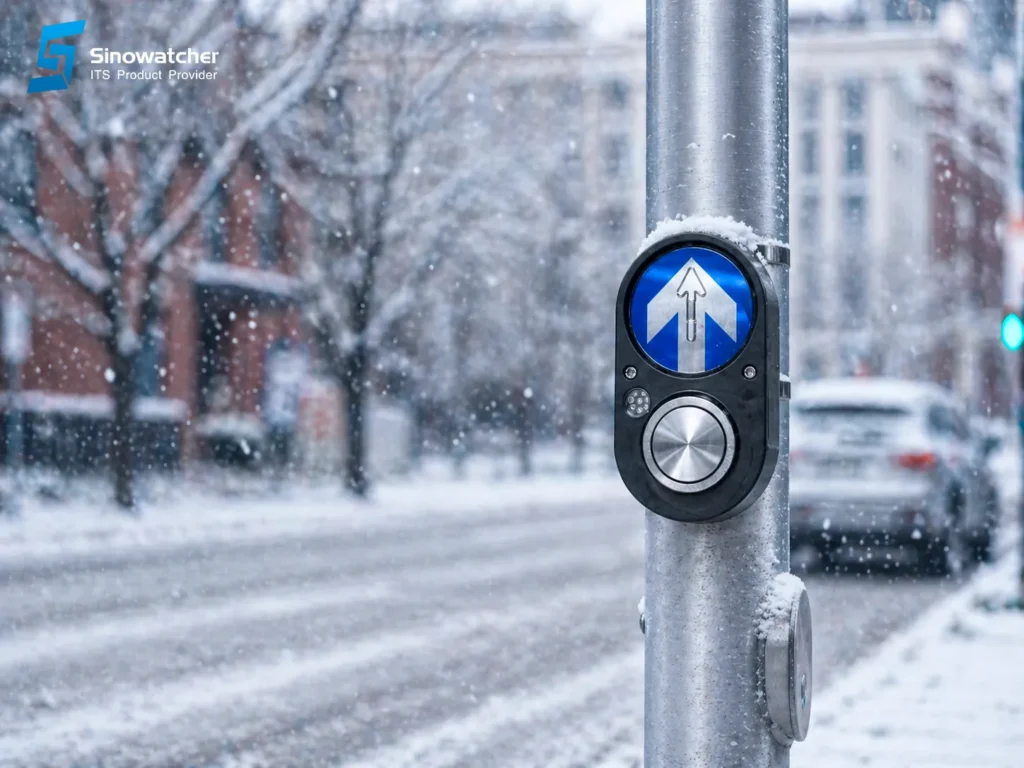
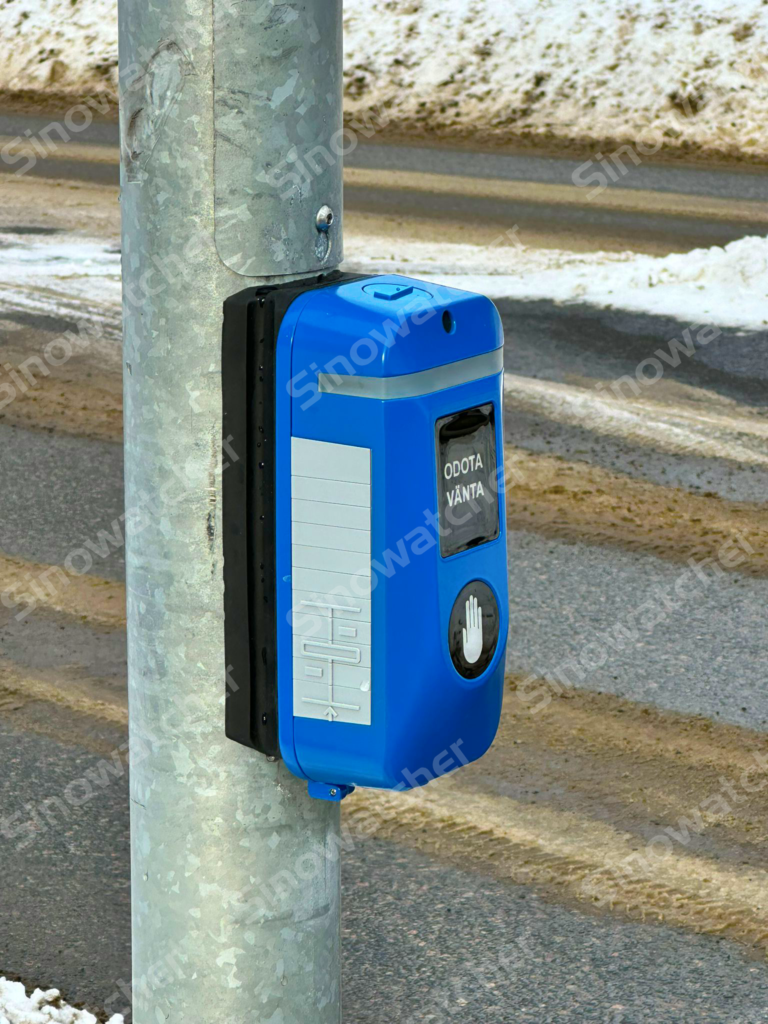
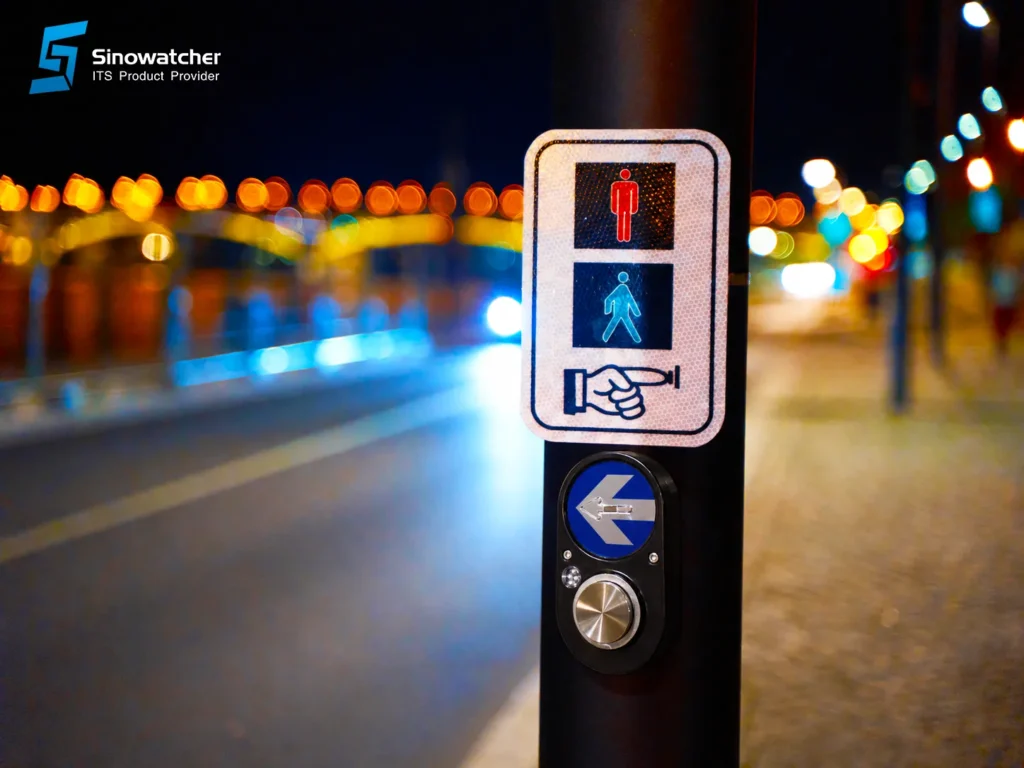
The Xentra Mechanical Push Button from Sinowatcher Technology Co., Ltd. is designed specifically for these modern pedestrian request systems. The product features a die-cast aluminum housing, IP65 protection, tactile directional arrows, and optional vibration feedback for accessible pedestrian crossing applications.
For municipalities and system integrators, this type of hardware offers a balance between durability, installation efficiency, and long-term maintenance practicality.
Accessible Pedestrian Crossing Design Still Requires Physical Interaction
As urban accessibility standards continue improving, APS infrastructure has become an increasingly important part of intersection design.
Pedestrians need clear confirmation that a crossing request has been registered successfully. Without proper feedback, users may become uncertain about system response or attempt unsafe crossings.
This is particularly important for:
- Visually impaired pedestrians
- Elderly users
- Children at school crossings
- Users navigating noisy urban environments
Because of this, many accessible pedestrian crossing systems continue incorporating physical activation interfaces together with tactile and audible guidance features, including:
- LED confirmation indicators
- Audible guidance systems
- Tactile directional arrows
- Vibration feedback modules
- Braille accessibility markings
These features help pedestrian request systems provide more intuitive interaction between pedestrians and traffic infrastructure while improving crossing confidence.
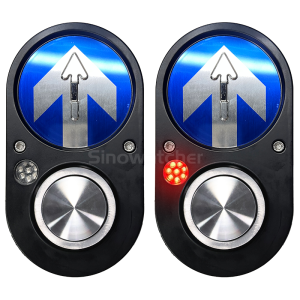
Mechanical vs Contactless Pedestrian Request Systems
In practice, cities rarely rely on only one activation technology.
Different pedestrian crossing systems are often selected according to traffic conditions, maintenance capability, project budget, and accessibility requirements.
Mechanical pedestrian push buttons are commonly preferred for:
- Conventional signalized intersections
- Retrofit traffic projects
- Outdoor environments with harsh weather exposure
- Areas requiring simplified maintenance procedures
Meanwhile, contactless activation systems are increasingly applied in:
- Smart city projects
- Metro and hospital infrastructure
- High-density pedestrian environments
- Hygienic public facilities
Rather than replacing one another completely, mechanical and contactless technologies are increasingly being deployed together according to operational requirements and local crossing conditions.
Reliability Still Defines Successful Pedestrian Request Systems
Within intelligent transportation systems, long-term reliability often has greater operational value than technical complexity alone.
A pedestrian request system that performs consistently across years of outdoor operation may ultimately provide more practical value than a highly sophisticated system requiring frequent recalibration or specialized maintenance support.
This consideration becomes particularly important for large municipal deployments, retrofit infrastructure projects, transport corridors, and intersections exposed to demanding environmental conditions.
For this reason, mechanical pedestrian push buttons continue to remain relevant within modern pedestrian request systems worldwide. Their combination of operational simplicity, environmental resilience, and accessibility support makes them a practical component of many accessible pedestrian crossing solutions.
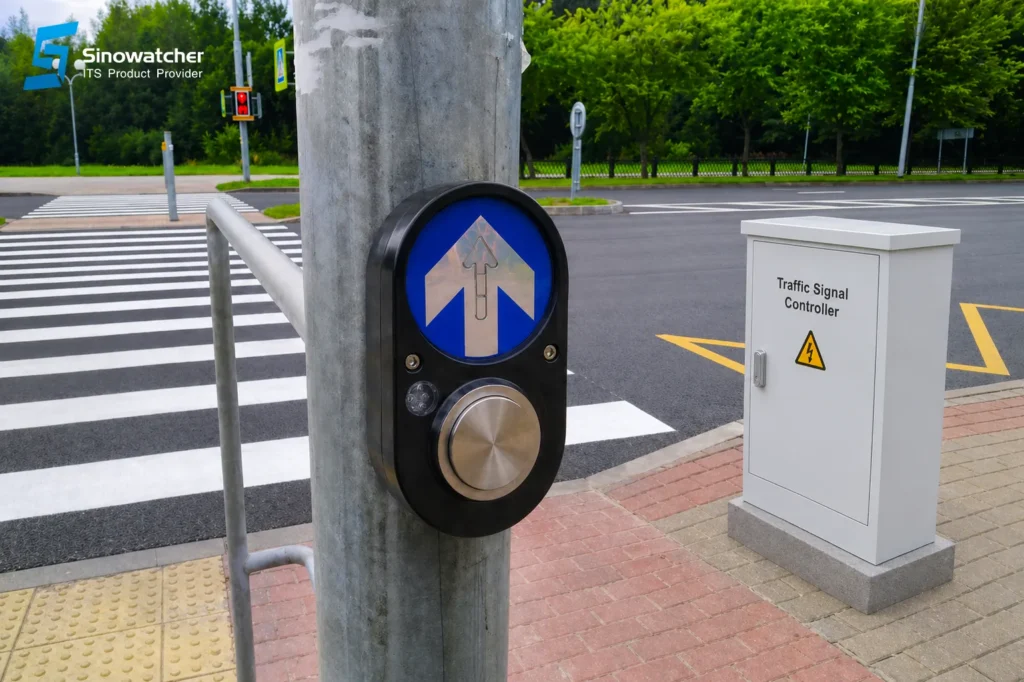
As cities continue developing smarter mobility infrastructure, the future of pedestrian crossing will likely depend on flexible combinations of technologies rather than a single universal solution.