English
  Spanish
  French
  Russian
  Arabic
Urban traffic infrastructure is often judged by what drivers and pedestrians can see: signal heads, road markings, pedestrian countdowns, and push-button devices installed on the roadside. For city maintenance teams, however, the real cost of a pedestrian crossing system is usually measured over years of outdoor operation. A contactless push button may look like a small device, but its long-term value can become significant when deployed across a large pedestrian request system.
This article looks at city maintenance ROI from a practical ITS perspective. Instead of focusing only on initial purchase price, it explains how contactless activation may influence maintenance frequency, equipment uptime, user experience, and lifecycle planning for modern pedestrian infrastructure.
Why City Maintenance ROI Matters in Pedestrian Infrastructure
Municipal traffic equipment is exposed to rain, heat, dust, vibration, vandalism, and constant public use. A traditional mechanical crossing button can remain a reliable solution in many environments, but repeated physical activation may gradually affect the switch mechanism, housing surface, seals, and mounting structure.
For a single intersection, this may not seem significant. Across hundreds of intersections, the impact becomes more visible. Each field visit may require labor coordination, vehicle dispatch, inspection time, spare parts management, and sometimes temporary traffic control. This is why city maintenance ROI should be evaluated as part of the full lifecycle of a pedestrian request system, not only as a hardware purchasing decision.
How a Contactless Push Button Changes the Maintenance Model
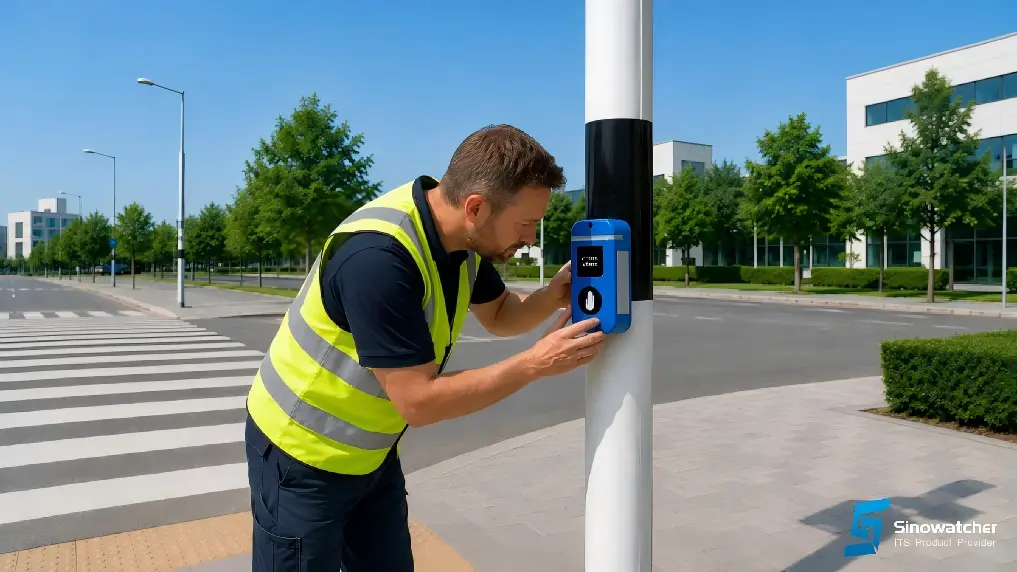
A contactless push button registers a pedestrian request without requiring direct pressure on a moving button surface. This does not remove all maintenance needs. The device still requires inspection, cleaning, electrical checks, and protection against environmental exposure. However, it may help reduce service issues commonly associated with repeated physical pressing.
In high-use locations such as downtown crossings, metro entrances, school zones, hospitals, and transport hubs, frequent contact may contribute to surface degradation, stuck buttons, damaged housings, or moisture and dust ingress around mechanical parts. A contactless design can help reduce these specific failure modes by limiting direct mechanical interaction.
From a maintenance planning perspective, the value is not only that the device is touch-free. The value is that the pedestrian request system may experience fewer button-related service issues over time, especially in locations where activation frequency is high and inspection resources are limited.
A Practical Framework for Evaluating City Maintenance
The maintenance value of a contactless push button should be evaluated through a lifecycle model rather than a fixed universal savings percentage. Each city has different labor costs, service contracts, pedestrian volumes, climate exposure, vandalism risks, and equipment replacement policies.
Instead of relying on a single ROI number, traffic departments can compare before-and-after maintenance records across selected pilot intersections. Useful indicators may include:
- Annual button-related service visits
- Average response time to field failures
- Device uptime
- Complaint frequency
- Replacement cycle
- Inspection workload
- Maintenance labor hours
- Frequency of stuck or damaged button reports
This approach allows a city to evaluate whether contactless activation is reducing maintenance pressure under local operating conditions. It also avoids overstating savings before enough field data has been collected.
For large pedestrian system deployments, even a moderate reduction in button-related interventions can support better maintenance planning, fewer emergency dispatches, and more predictable infrastructure operation. The strongest city maintenance potential is usually found at intersections with high pedestrian demand, frequent public interaction, difficult service access, or recurring maintenance records.
Where Contactless Push Buttons Can Deliver Stronger ROI
The maintenance return is not the same at every intersection. It is usually stronger in locations with high pedestrian demand, frequent public interaction, or higher risk of misuse and wear.
Typical high-value scenarios include commercial districts, bus rapid transit corridors, metro station exits, university campuses, hospitals, school crossings, tourist areas, and accessibility-focused intersections. In these environments, a pedestrian request system is used repeatedly throughout the day, which increases the importance of durability, fast response, and clear user confirmation.
For quieter residential streets, the ROI case may be more moderate. A city does not need to replace every push button at once. A more practical strategy is to prioritize sites where maintenance records show frequent service calls, user complaints, vandalism exposure, or accessibility upgrade requirements.
Beyond Maintenance Cost: Reliability and Uptime
City maintenance ROI should also include infrastructure uptime. When a pedestrian request device fails, the issue is not only a repair task. It can affect pedestrian confidence, crossing compliance, accessibility performance, and public perception of the traffic system.
A well-designed product can support more consistent operation by reducing dependence on moving parts at the activation point. In a modern pedestrian system, reliability is especially important because the button is often the direct interface between pedestrians and the signal controller.
Clear visual feedback, intuitive activation, and stable controller communication all contribute to safer and more predictable crossing behavior. These benefits are harder to express as a single number, but they are important when cities evaluate long-term traffic infrastructure performance.
Accessibility as Part of City Maintenance ROI
Accessibility is another factor that affects the real value of pedestrian infrastructure. A crossing device that is difficult to locate, activate, or understand may create operational problems even if the hardware itself is functioning.
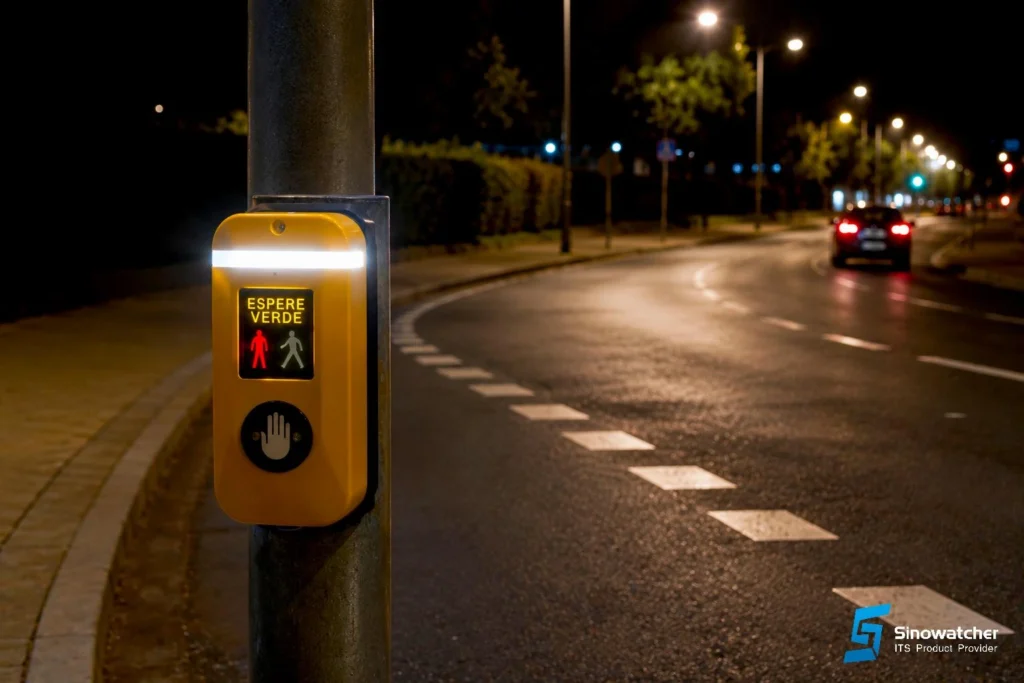
Modern accessible crossings often combine visual indicators, tactile guidance, audible confirmation, and vibration feedback. A contactless push button can support this approach by providing easier activation for pedestrians carrying bags, wheelchair users, elderly pedestrians, or users who may prefer not to touch public surfaces.
For cities, these features can reduce confusion at crossings and improve the usability of the pedestrian crossing. Better usability may also lower complaint volume and reduce repeated site checks caused by unclear user interaction.
PedSense Contactless Push Button for Smart Pedestrian Requests
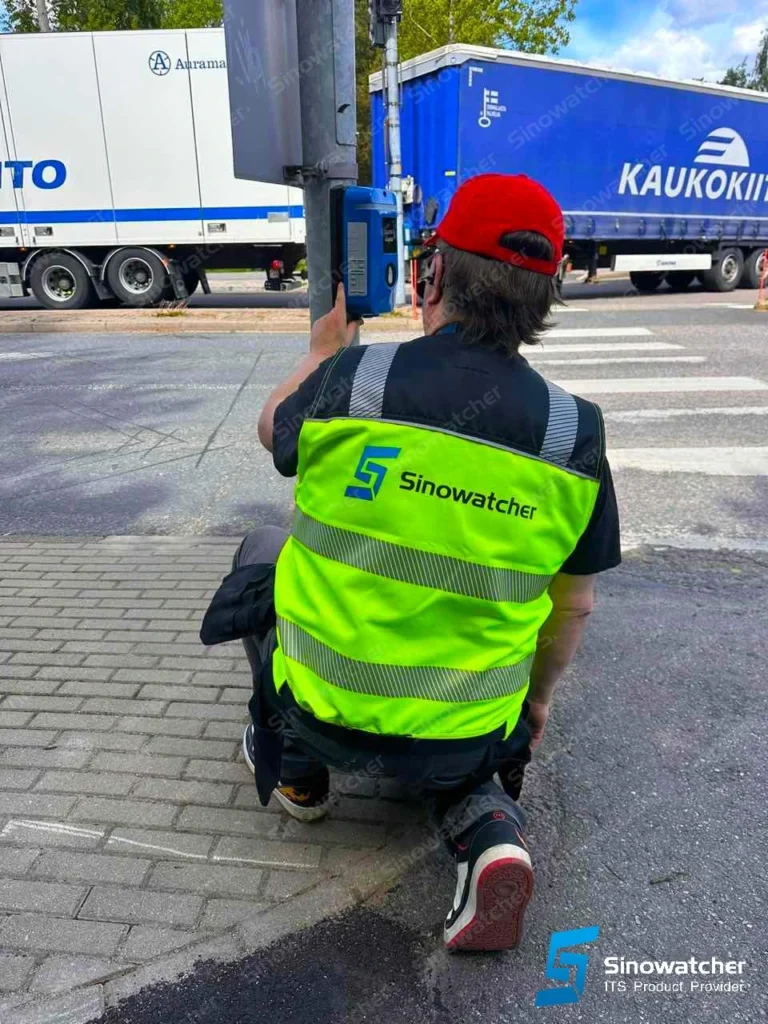
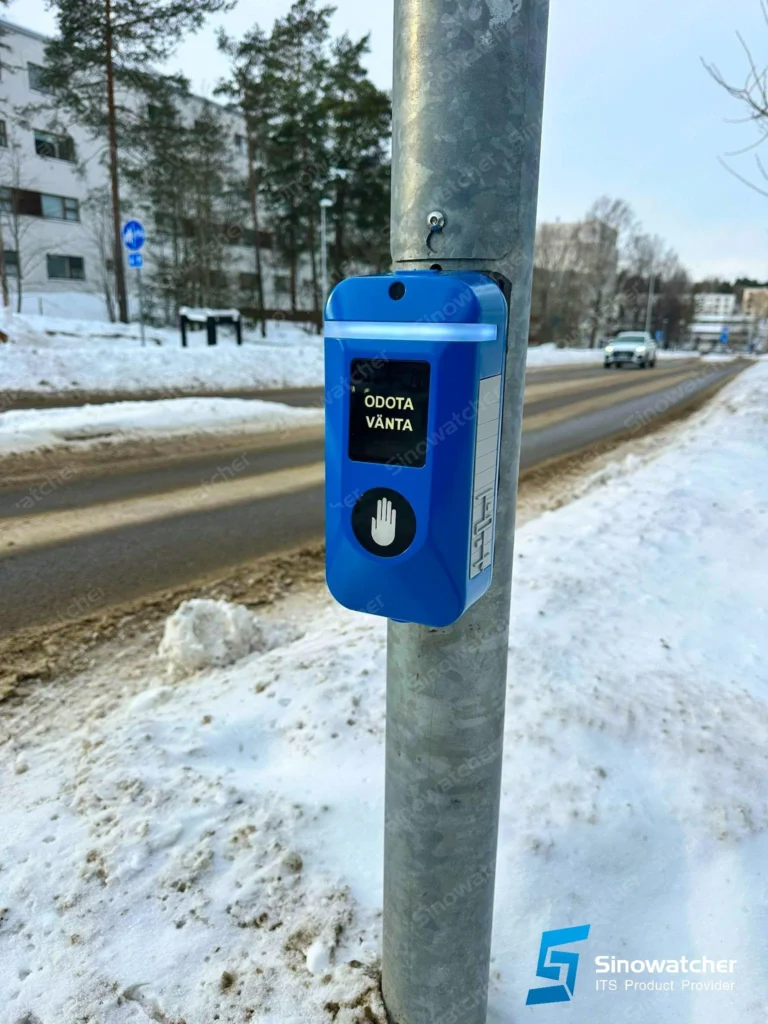
For projects requiring a touch-free crossing interface, the PedSense Contactless Push Button from Sinowatcher Technology Co., Ltd. provides a practical option for intelligent pedestrian crossing applications. It combines contactless activation with user feedback functions, helping municipalities and ITS integrators improve pedestrian interaction while maintaining stable request activation in real-world urban environments.
By combining contactless activation with user feedback functions, PedSense can support a pedestrian request system that is easier to operate in real-world urban environments. For municipalities and ITS integrators, this type of solution can help improve pedestrian interaction while supporting stable request activation in modern crossing infrastructure.
How Cities Can Evaluate ROI Without Overclaiming Savings
A responsible maintenance analysis should avoid fixed universal savings claims. Actual results depend on climate, installation quality, pedestrian volume, maintenance contracts, vandalism rates, local labor cost, and equipment age.
Instead of promising a specific percentage reduction, cities can evaluate the product performance through practical indicators such as annual button-related service visits, average response time to failures, device uptime, complaint frequency, replacement cycle, and inspection workload.
This approach is more rigorous because it connects ROI to measurable maintenance behavior. A city can start with a pilot group of intersections, compare service records before and after deployment, and then decide whether wider installation is justified.
A Practical Upgrade for Long-Term Urban Operations
The contactless push button should not be viewed only as a hygiene upgrade or a smart city accessory. In the right location, it can become part of a broader maintenance strategy that improves crossing reliability, reduces avoidable mechanical wear, and supports a more user-friendly pedestrian request system.
For city traffic departments, the strongest city maintenance potential is likely to appear where pedestrian demand is high, service access is costly, and crossing reliability directly affects safety or accessibility. As cities continue modernizing pedestrian infrastructure, evaluating lifecycle performance will become an important part of choosing the right crossing technology for each urban environment.