French
  English
  Spanish
  Russian
  Arabic
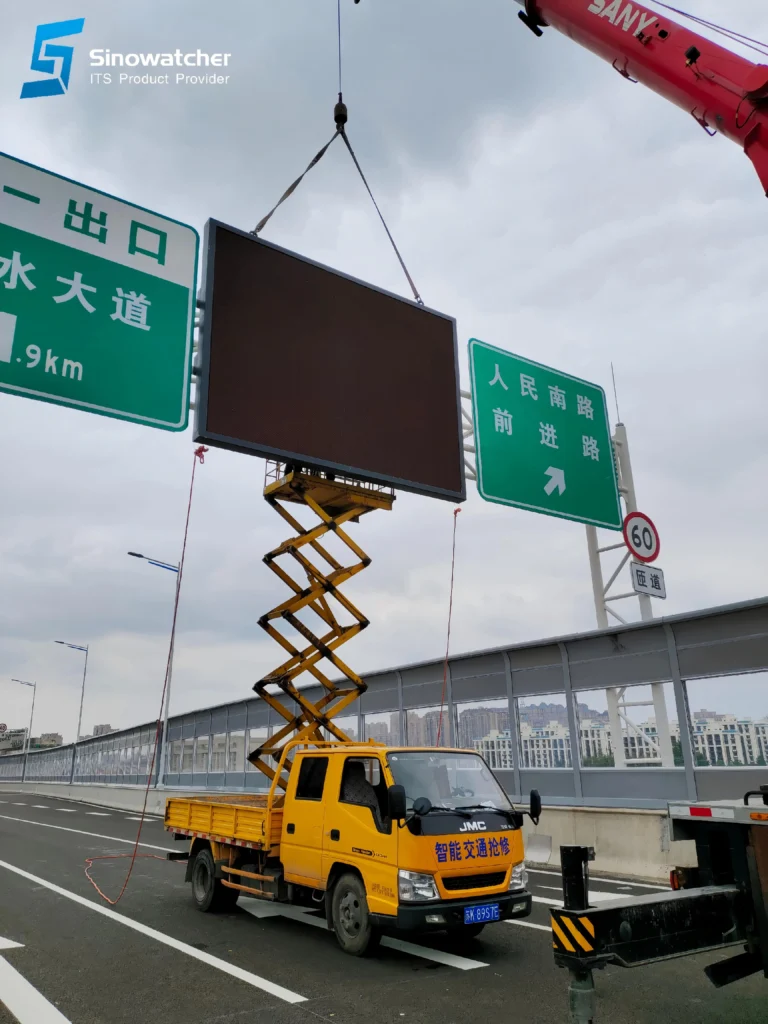
À mesure que le développement des autoroutes intelligentes s’accélère dans le monde entier, la gestion du trafic évolue de la signalisation statique et des horaires fixes vers la détection en temps réel et la réponse dynamique. Sur les autoroutes, des facteurs de risque tels que la pluie, la neige, le brouillard et les incidents soudains peuvent affecter à tout moment l'efficacité et la sécurité du trafic routier. Les panneaux de signalisation statiques traditionnels ne peuvent pas ajuster les informations en fonction des conditions routières en temps réel, ce qui les rend inadaptés aux scénarios routiers complexes et en évolution rapide. Panneaux à messages variables (VMS), en tant qu'équipement routier STI de base, sont déployés sur des structures de portiques aériens pour couvrir plusieurs voies et fournir de manière dynamique des limites de vitesse, des avertissements de danger et des messages de sécurité, servant de plate-forme clé pour améliorer la sécurité routière et permettre une gestion dynamique du trafic.
1. Trois fonctions essentielles des panneaux routiers à messages variables
Monté directement au-dessus des voies de circulation, le VMS à portique aérien est l'un des dispositifs de diffusion d'informations routières les plus efficaces sur les autoroutes. Ses fonctions couvrent le contrôle du trafic, l'avertissement de risque et la messagerie publique, répondant ainsi aux besoins opérationnels complets de toute solution d'autoroute intelligente.
1.1 Gestion dynamique des limitations de vitesse : adaptation aux conditions météorologiques et à la fluidité du trafic
Le contrôle dynamique de la vitesse est l’application la plus critique du VMS routier. Les panneaux de limitation de vitesse fixes traditionnels ne peuvent pas s'adapter aux conditions de faible visibilité telles que la pluie, la neige et le brouillard, ni répondre aux besoins temporaires de réduction de vitesse pendant les heures de pointe ou à proximité des zones d'incident. Dans le cadre d'un système intégré de limitation de vitesse dynamique, le VMS du portique aérien peut émettre des instructions de vitesse spécifiques à une voie, ajustant automatiquement les limites en fonction des données des systèmes de surveillance météorologique et de détection des véhicules. Par exemple, la vitesse peut être réduite à 100 km/h dans des conditions pluvieuses et encore abaissée à 80 km/h dans les sections brumeuses, guidant les conducteurs dans des transitions de vitesse en douceur pour réduire les collisions arrière et les risques de dérapage tout en maximisant la capacité de la route dans des limites sûres.
1.2 Alertes en temps réel sur les incidents et la circulation : atténuation des risques en amont
Les accidents soudains, les travaux de construction et les embouteillages en amont sur les autoroutes peuvent facilement conduire à des incidents secondaires ou à des embouteillages généralisés si les conducteurs ne sont pas informés à l'avance. VMS sert de terminal de transmission d'informations à la plateforme de gestion du trafic, fournissant des affichages d'avertissement de trafic en temps réel plusieurs kilomètres en amont d'un point d'incident. En émettant des alertes de danger et des suggestions de détour à un stade précoce, VMS guide les conducteurs pour qu'ils décélérent et changent de voie de manière proactive, déplaçant ainsi le point de réponse aux risques vers l'avant et empêchant les réactions en chaîne provoquées par une réaction tardive du conducteur.
1.3 Messages de sécurité en couleur : extension des services de gestion routière
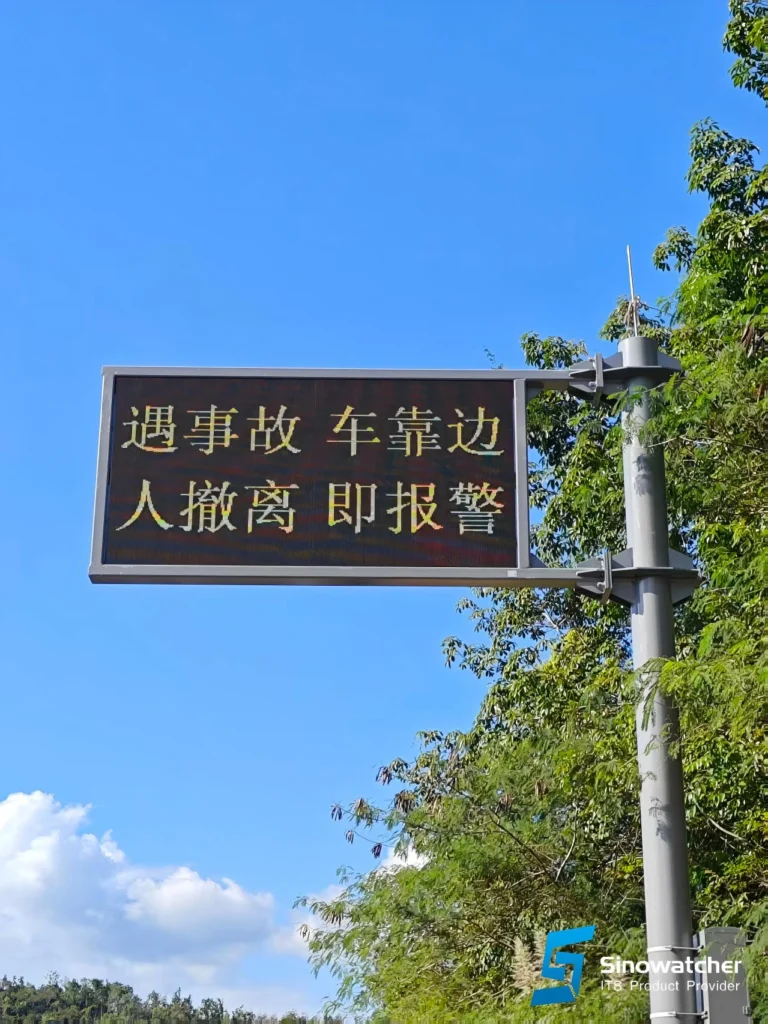
Beyond control instructions, a full-color VMS display can carry image-and-text safety messaging, broadcasting reminders such as “Wear Seat Belts” and “Avoid Fatigued Driving,” as well as holiday travel guidance and public service announcements. Compared with single-color icon-based speed signs, full-color VMS offers greater information capacity and stronger visual impact, balancing traffic control with traveler services and safety education to enhance the reach and responsiveness of highway management.
2. Valeur fondamentale du VMS à portique aérien pour la sécurité routière intelligente
Par rapport aux panneaux latéraux, le VMS à portique aérien offre des avantages irremplaçables dans les scénarios d'autoroute et constitue la solution privilégiée pour la gestion dynamique du trafic dans toute solution d'autoroute intelligente.
Premièrement, la couverture indépendante à plusieurs voies élimine les angles morts visuels. Le VMS à portique aérien peut être configuré avec des modules d'affichage correspondant à chaque voie, de sorte que les conducteurs de chaque voie reçoivent des informations de vitesse et d'avertissement directement dans leur champ de vision. Cela évite les problèmes liés aux panneaux latéraux bloqués par de gros véhicules ou provoquant une confusion sur plusieurs voies, améliorant ainsi considérablement la précision de la transmission des informations.
Deuxièmement, une visibilité élevée par mauvais temps élimine les goulots d’étranglement liés à la faible visibilité. VMS utilise une technologie d'éclairage actif avec une luminosité qui s'adapte automatiquement à la lumière ambiante, offrant une distance de visualisation bien plus grande en cas de pluie, de brouillard et de nuit que les panneaux réfléchissants traditionnels. Cela garantit une fourniture continue d’informations efficaces dans des environnements à faible visibilité, garantissant ainsi la sécurité routière dans des conditions météorologiques extrêmes.
Third, system integration capability supports closed-loop smart highway management. VMS can be deeply integrated with vehicle detection systems, weather monitoring systems, and traffic management platforms, enabling fully automated operation from data collection to logical decision-making to information delivery. Dynamic speed limits and incident warnings can be executed without on-site manual operation, making VMS an indispensable execution terminal in the “sensing–decision–execution” closed loop of smart highways.
3. Considérations clés pour la sélection du VMS routier
Highway VMS fonctionne à long terme dans des environnements extérieurs complexes, la sélection doit donc équilibrer la conformité des performances, l'adaptabilité environnementale et la compatibilité du système pour garantir un fonctionnement stable à long terme.
3.1 Performances optiques et adaptabilité environnementale
Les performances optiques de l'appareil doivent répondre aux normes industrielles en vigueur, avec une plage de réglage de la luminosité suffisante et une conception anti-éblouissante pour garantir une visibilité sans être trop lumineuse au soleil et clairement lisible sous la pluie et le brouillard. Il doit également atteindre un indice de protection élevé, avec une résistance aux températures élevées et basses et à la corrosion, pour s'adapter aux divers climats régionaux.
3.2 Compatibilité structurelle et portique
Les dimensions des portiques routiers et le nombre de voies varient selon le projet. Le VMS doit prendre en charge la personnalisation modulaire, permettant un ajustement flexible de la taille de l'affichage et de la méthode d'installation en fonction de la portée du portique et du nombre de voies sur le site du projet. La conception structurelle doit également répondre aux exigences de charge de vent pour l'installation extérieure sur autoroute, avec une installation et un entretien pratiques pour réduire les coûts d'exploitation à long terme.
3.3 Capacité d'intégration et de maintenance du système
L'appareil devrait prendre en charge les protocoles de communication de trafic courants et s'intégrer aux plates-formes de gestion des autoroutes régionales, permettant le contrôle à distance, la surveillance de l'état et l'autodiagnostic des pannes. Il doit prendre en charge des modèles multi-scénarios préconfigurés, permettant de définir des profils de limitation de vitesse, d'avertissement et de messages éducatifs en fonction des exigences du projet, améliorant ainsi l'efficacité de la gestion.
3.4 Correspondance des fonctions basée sur des scénarios
Sélectionnez le produit approprié en fonction des exigences principales du projet : pour les sections axées sur les limitations de vitesse dynamiques et les avertissements d'incidents, un VMS basé sur des icônes d'une seule couleur offre un coût inférieur et une directionnalité d'affichage plus claire ; pour les sections qui nécessitent également une éducation à la sécurité et des services aux voyageurs, un écran VMS couleur offre une capacité d'information plus riche.
Conclusion : VMS comme terminal central pour la gestion dynamique des autoroutes intelligentes
Les panneaux à messages variables sont bien plus que de simples affichages électroniques ; ce sont les principaux terminaux d’exécution des systèmes intelligents de gestion des autoroutes. Ils transforment les données de détection en instructions de conduite que les conducteurs peuvent comprendre directement, transformant l'infrastructure routière statique en nœuds de gestion dynamiques et jouant un rôle essentiel dans la fourniture d'informations et l'orientation des risques en cas d'incidents météorologiques défavorables et d'urgence.
En tant que fabricant professionnel d'équipements de transport intelligents, Observateur chinois apporte une vaste expérience de projet et une expertise produit dans le domaine des STI. Nous proposons une gamme de produits de panneaux à messages variables à portique aérien, couvrant à la fois les affichages dynamiques d'icônes de limitation de vitesse et les affichages graphiques en couleur. Nos solutions prennent en charge des dimensions et des configurations de voies personnalisées pour répondre aux exigences spécifiques du projet, avec une excellente adaptabilité à l'environnement extérieur et une compatibilité système pour les projets de construction et de mise à niveau d'autoroutes intelligentes dans le monde entier. Pour la sélection de projets et l'assistance en matière de solutions, veuillez nous contacter pour des informations détaillées sur le produit.